On July 8th, the Environmental Education course students had an insightful visit to thee Orchard Garden, filled with new learning experiences. We are so thankful to Dr. Susan Gerofsky and James Trentos for welcoming us and sharing this amazing space with us. Below are some reflections from the students and photos of our visit.
Student Reflections
Plants and nature are able to provide more than just food but rather we are
able to use the resource in its entirety. we must respect the plant and use
what we need strictly.
we learned how to weave with branches of blackberry trees and that many of
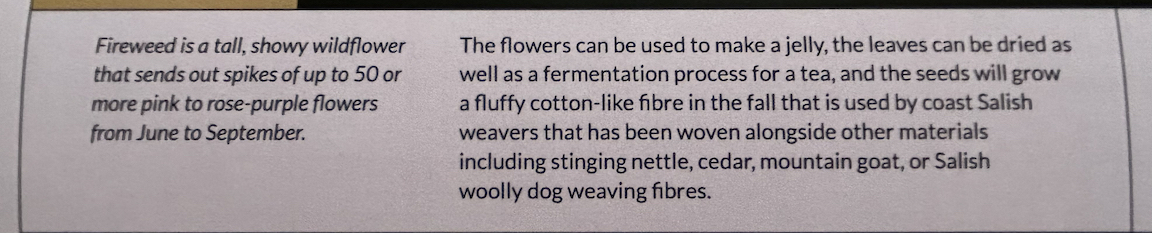
the berries we came across are edible. Fireweeds grow in adversity.
making rope from natural fibers (eg twisting grass)
beautiful getaway in an urban space
reciprocity - gathering berries to share for potluck and a reciprocal
offering from students of weeding, planting and watering
learning about new plants native and non-native species
I really like how you touched on reciprocity and gathering
berries. I have always thought that food brings people together and this
reminds me of summers on the sunshine coast me and my siblings would gather
berries in the forest and then share them with each other.
1 area of the garden reveals a food forest which people can
come in and learn about some Indigenous plants and the relationships between
some "weeds" and other plants. An example of this is the red clover,
which seems like a "weed" at first, but upon listening and learning,
it in fact helps the garden as it nitrogen fixes the dirt. This is an example
of two-eyed seeing. Which is where you can use both Western and Indigenous
knowledges to view the world.
learning outside is fun and interesting
getting to physically do activities and be 'hands on' was cool
re-frames the way you look at the world and look at plant life, like looking
at a blackberry bush not just for the berries but also for the weaving you
could do with it
I was taken with how good I felt at the end of the
experience. I suspect that it was combination of the fresh air and sunshine,
the learning, the good company or the beautiful setting, but it significantly
boosted my mood. I am reflecting that that, in itself, could be a learning
objective for lessons and activities.
Skills learned such as tying grass can be useful skill that
can be taught to students as part of the outdoor education curriculum.
Main
take away idea = interconnectedness
Wasn’t
a typical orchard with rows, was an intermingling of purposely planted plants
that grow amongst other naturally occurring plants (design was intent but feels
less structured)
Was
fascinating to see the process of finding a blackberry stem to make rope out of
and how there is more to the decision than just making picking the first stem
you see
Lots
of good information for what different types of plants could be used for
Braiding grass --> If I was to ever take my students on a
class camping trip it would a an activity I would do with my students. It is
also an interesting survival technique that my students could take into
their toolbox and use if ever required if they was to go camping on
themselves.
Learned how to weave blackberry tree branches - we must respect and thank
the plants that we use
Only take what you need, its important to be aware of what you use and how
much you use
Interesting fact: Fireweeds grow in adversity!
My key takeaway stemmed from peeling the bark off of the blackberry bush.
This connects to redefining how we look at the natural world around us and how
we can do this with our students as well. Now when I look at a blackberry bush
I will see it differently, I want my students to also experience this and see
the natural world in different, creative ways.