Showing posts with label Education. Show all posts

Friday, 1 August 2014

FUN in the garden

Perennial bee garden, The (new) Orchard Garden
Yesterday, a wonderful thing happened in the garden. After many emails to figure out various scheduling challenges, Food FUN campers and 25 Pre- and In-service teachers in Dr. Sandra Scott's EDCP 328 Environmental Education course came together in the new garden on July 31, 2014.

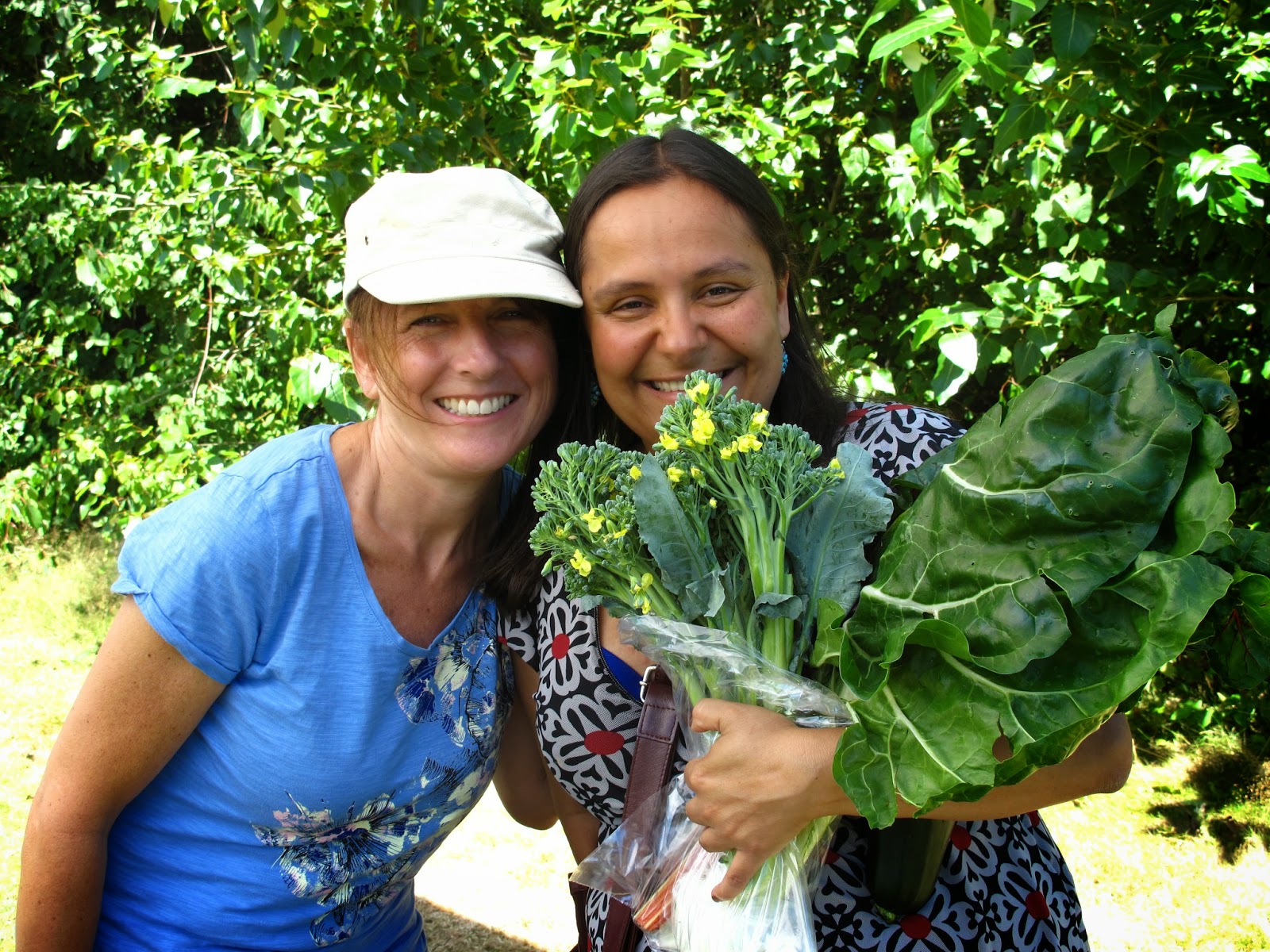
The end of July is a spectacular time in the garden, and the abundance of food of every shape and size was exciting for everyone. For a giant garden salad, we harvested sweet, crisp kohlrabi, carrots, brilliant rainbow chard (enormous!), kale, basil, lettuce, arugula, cucumbers, zucchini, turnip, and, for a splash of colour, nasturtium blossoms.

While some worked to harvest and prepare the salad, others got the opportunity to explore the beautiful perennial herb, flower, bee garden with Navi & Jen's scavenger hunt.

Brilliant rainbow chard
The theme of the FUN camp is food and environment, so after we ate our delicious salad (kids came up for seconds & thirds!) we played a water game, racing as teams to transfer the veggie washing water in leaky buckets to our thirsty apple trees. In a world where 2 billion people are water insecure and agriculture consumes 70% of the world's water, there's lots to talk about when we think about climate change, food security, water issues, and the environment. Students--big and little--had lots of ideas to share for what we can do to make a difference.

"I have plants growing at my house - cucumbers, lettuce, radishes, and just last week I planted carrots!" said one child.

An EDCP 328 student shared how different plants can grow together (polyculture) so that they are healthy and use less water. Indigenous gardeners in North America frequently planted the Three Sisters, the corn, beans, and squash, to grow together providing shade (squash), fertilizer (beans), and structure (corn).

Watering game
Using less water through different irrigation methods was another suggestion, though this led to a discussion as to why most of our food comes from a desert climate in California, where climate change is causing serious droughts and terrible fires.

Thank you to everyone who came to the garden. It was just a short visit, so please come again. It was also likely my last class that I will host in the garden, since I am moving to Ontario in mid-August - so farewell garden, gardeners, and all the wonderful people I have had the pleasure of knowing these past few years!

Julia


Thank you, campers & UBC students!

Wednesday, 30 July 2014

Doctoral students "solidarize" with the garden

Today, a class of doctoral students from EDST's EdD (EDST 593A.971 Ethics in Educational Leadership) program joined me in the garden with their course instructors Jeannie Kerr and Vanessa Andreotti.

Uprooted cherry tree & oak cuttings, old Orchard Garden
We walked down from the Scarfe building, along the 'sacred lawn' on Main Mall, and paused for a moment at the old garden. Jeannie described the old garden as a graveyard, and it really does feel sad and abandoned, particularly now that construction for Vantage College has begun and the giant oak tree that flanked the garden has been cut and piled onto the space. We talked about mourning, in the context of this particular garden but also more generally in terms of the extinctions (of plants, animals, languages...) that accompany globalization and the Anthropocene.

Washing station
The new garden, in contrast, was vivid and vital and filled with surprises and abundance. Harvesting giant chard, kohlrabi, cucumbers, zucchini, kale, carrots, and beets reminded us of the great gifts of life that nurturing the land, being nurtured by the land can offer. What are our individual and collective ways of thanking the land for these gifts?

Harvesting turned to food preparation (and weeding - thank you!) as we prepared a rainbow salad and vegetables to take home. Gathered together around the food, we discussed the course readings around accountability (Ranson, 2003) and decolonization and the pedagogies of solidarity (Gaztambide-Fernandez, 2012).


Thank you to Jeannie, Vanessa, and the wonderful students for visiting the garden and your generous donation. Please come again!


Readings
Gaztambide-Fernández, R. A. (2012). Decolonization and the pedagogy of solidarity. Decolonization: Indigeneity, Education & Society, 1(1), 41-67. 

Ranson, S. (2003). Public accountability in the age of neo-liberal governance. Journal of Education Policy, 18(5), 459-480. 

Sunday, 16 March 2014

Urban Farmer Field School - Check it out!

Find out more at SPEC's website: http://spec.bc.ca/uffs
The Society Promoting Environmental Conservation (SPEC) is running the third season of their Urban Farmer Field School (UFFS). The UFFS is for new and experienced growers who want to receive hands-on training in sustainable urban agriculture. Class topics are wide-ranging, including growing food, gardening, urban foraging, canning, and more. The next class is March 20th, 2014.