Wednesday, 14 May 2025

Nitobe, Buttercups and Garry Oak meadows


Today, we began our time at UBC’s Nitobe Memorial Garden, a stunning Japanese garden designed as a space of harmony, balance, and reflection. We learned that the garden was a memorial of Dr. Inazo Nitobe, who saw himself as a bridge between East and West. That idea is beautifully embodied in the layout of the garden, where plants native to both the west and east are placed intentionally side by side. It made me think about cultural blending in landscape design  how a garden can be more than just a collection of plants, but a philosophy and art practice.

One of my favorite aspects was how lawns were made of soft moss instead of grass. There was a deliberate care in every path and planting but at the same time, nature was still clearly present. It’s a deeply manicured space that doesn’t feel artificial it embraces the art of nature.


Back at the Orchard Garden, I’ve been collecting buttercups, which are currently spreading like weeds across the site. While they're invasive, I’m curious about transforming them into something creative possibly using them for natural dyes or pigments. (When i arrived at my studio i quickly attempted some methods but will need a mortar and to wait for them to dry to get a better sample --I’ll report back once I’ve experimented with their color potential.)

Later in the day, our focus shifted to planting a Garry Oak meadow beside the orchard. The Garry Oak ecosystem is endangered in B.C., so starting this project felt meaningful. We planted companion species that occur in a Garry Oak meadow.

We also learned a hands-on method of using comfrey leaves to improve soil health. After harvesting the leaves, we chopped them up and layered them on top of the soil as a natural fertilizer. Over time, the leaves will decompose and feed the soil.

Looking forward to seeing how both the Garry Oak meadow and my buttercup dye experiments develop in the weeks ahead!


Tuesday, 13 May 2025

A Day at the UBC Orchard Garden: Sunshine, Soil & So Many Species!


Today was one of those golden Vancouver spring days! Sun on our backs, dirt under our nails, and curiosity buzzing in the air. As part of my Community Field Experience (CFE) in the UBC Secondary Education Program, I got to spend a full day learning with the land. It reminded me why I chose to teach in the first place.

Morning: Rain Gardens & Biodiversity

We kicked off the morning at Norma Rose Point Elementary, where we explored their schoolyard rain garden—an oasis of biodiversity tucked between buildings and sidewalks. We spotted 12 to 15 plant species in this one small area, from native flowers to edible herbs, all working together to soak up water and support pollinators.


Wild strawberry patch! Look closely for little white flowers! Those mean berries are coming!


Hanging with the strawberries is our friend lemon balm! Crush the leaves for a calming citrusy scent. 


Teeny tiny blue forget-me-nots peeking through the leaves. 

 Midday Mischief: Guerrilla Gardening by Scarfe

From there, we headed over to the Scarfe Building for some guerrilla gardening. We added seeds ( sunflower, peas, wildflowers, lavender and so much more) to a spot started by Susan with some prolific soil from the Orchard Gardens. We found a few other neglected corners of soil and planted a few hardy, hope-filled greens (and a few rows of carrots....not telling where!). There's something empowering about quietly planting life where no one expects it.


Herb robert chilling with the Northern red oak...room for everyone!


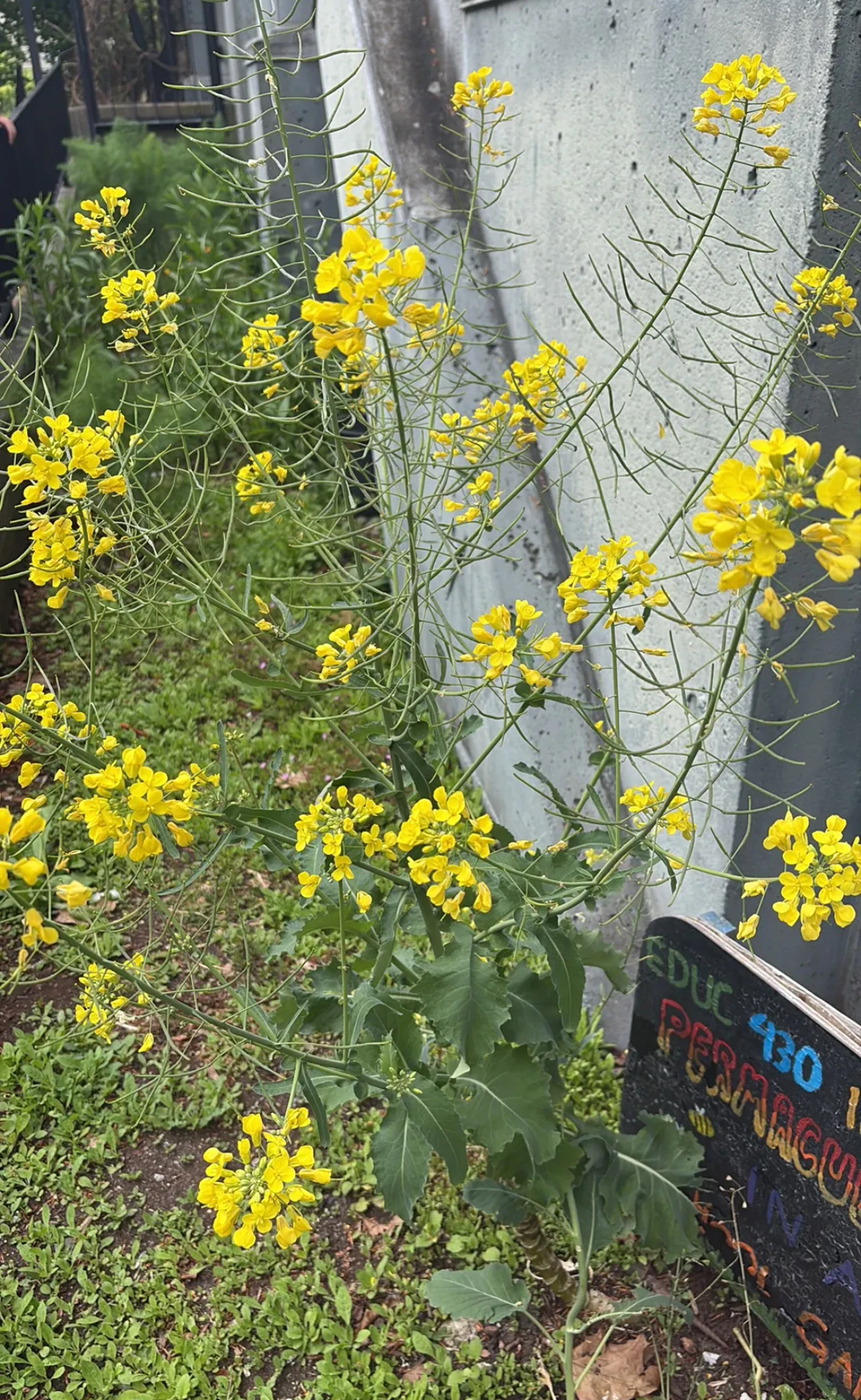
Field mustard! So pretty!

Sun, Soil, and Preparing for the Sisters


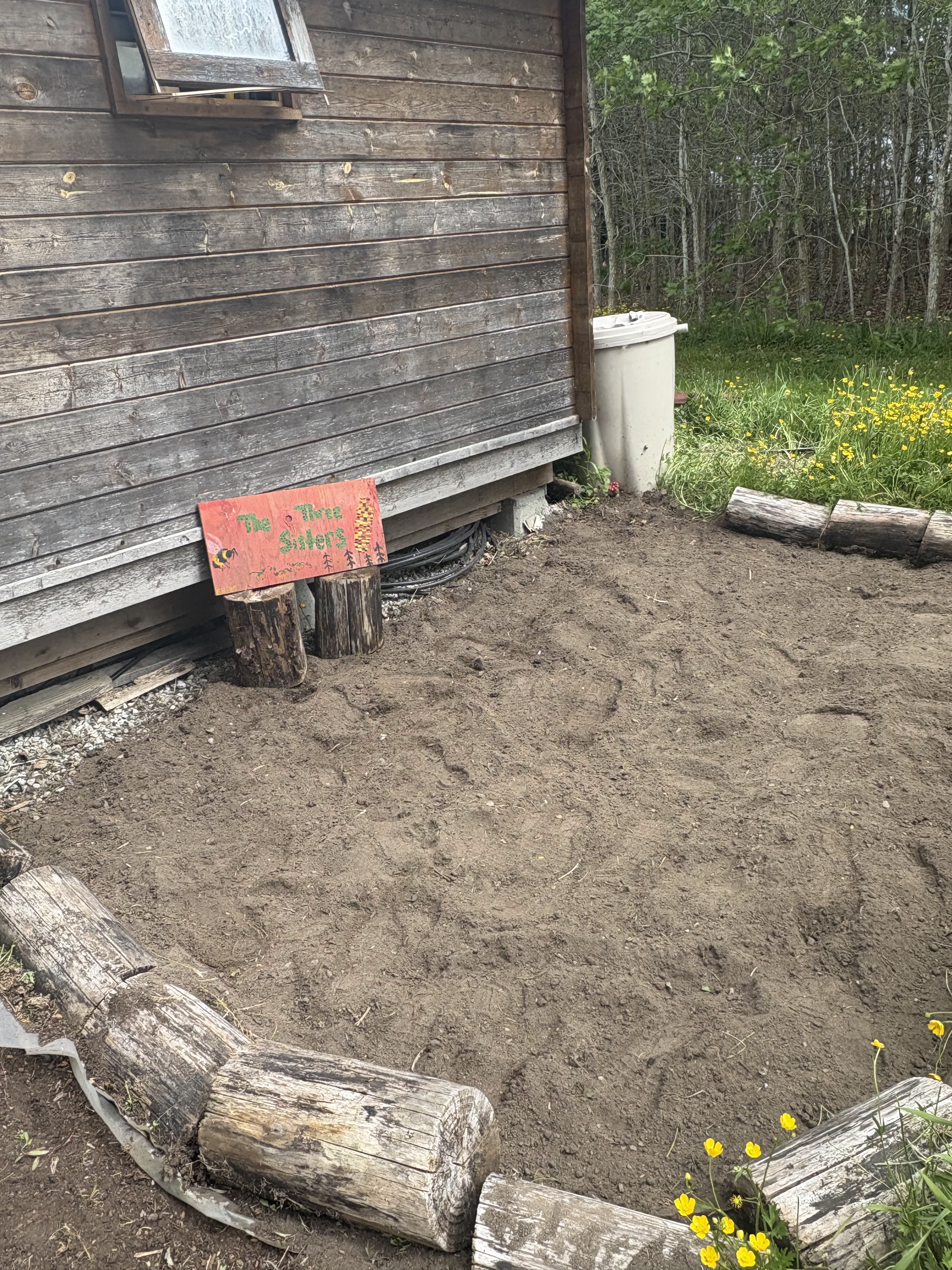
After a lunch break in the sun, we headed over to the UBC Orchard Garden for some hands-on work. Our task? Juli and I decided we wanted to  get a plot ready for a Three Sisters Garden—a companion planting of corn, beans, and squash that's been practiced for generations by many Indigenous peoples. I’ve always wanted to try planting one but don’t have enough sun at home, so this feels like a dream come true.

 Big thanks to past students who left this legacy—and to the Maya in Exile Garden at UBC Farms for continued inspiration.

We ended the day with some solid weeding (very satisfying), some plant ID (nerdy fun), and a whole lot of good conversation about learning beyond the classroom.


Onwards!

I left the garden tired, sun-warmed, and deeply recharged. There’s something about weeding, planting, and noticing that slows time and sharpens your sense of place.  This experience wasn’t just about gardening. It was about learning how to notice, how to listen to land, and how to co-create spaces of care and growth. This is something I hope to carry forward in my future classroom (which hopefully isn't confined by four walls!). Heading to stroll Nitobe Gardens in the morning tomorrow and then an afternoon of planting. What a dream!


Monday, 12 May 2025

Under the foxglove tree


After a warm welcome and a clearing and reorganizing of the shed, we cleared and reorganized our minds post-practicum. Then we walked towards an unidentified flowering tree nearby. We noticed a heavy, musky perfume, with notes of vanilla, even before we arrived. The blossoms seemed close to finishing. Under this foxglove tree, or Paulownia tomentosa (non-native), also known as the princess tree or empress tree, we realized the hollow, brittle nature of the branches would be ideal for making pencils or even a flute. This led to brainstorming for our first workshop. Previous conversation had touched on the repurposing of harmful, invasive plants, as well as the justifications, possibilities, and tensions common between art education and learning from and with a garden or natural space. We have arrived and are looking forward to the days outdoors ahead.


J, M + K