Tuesday, 12 May 2015

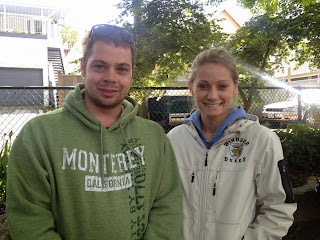
Thank you, Pailin and Jan-Lin, and to all the Orchard Garden team involved in this great CFE experience

I want to let everyone know how impressed I am with Pailin and Jan-Lin, the secondary teacher candidates doing their Community Field Experience three-week practicum in the Orchard Garden. They are doing such amazing work, and you can read some of their thoughts and insights in the great blog posts on this site.

I am also so grateful for the awesome work the Orchard Garden student team is doing in completely organizing and leading the CFE. Toni, Ozlem, Kwesi, Myron, Laura, Scott, Chessa, Galen, our new LFS student Bryan -- and I hope I haven't left anybody out, as so many of the team have been involved! Stacy at Landed Learning and the teachers at Tyee Elementary have been so welcoming to our team and CFE students -- much appreciated. Toni certainly deserves huge applause for taking on all the organization and planning of the three weeks.

I find it hard that it is so rare it is to have students run important aspects of teacher education programs. The students at the UBC Orchard Garden are proving how well this can work, and how much we can all learn from each other. Inspiring!

I'm posting a few photos from the day at Tyee last week, where I joined Jan-Lin, Pailin, Toni, Scott and Chessa (and left with a bike basket full of garlic greens and lemon balm!)




Friday, 8 May 2015

CFE Week Two: A Real Kindergarten!


Children are like plants and teachers are the gardeners. This idea is not a new one. In fact, this idea was the foundation basis of Friedrich Fröbel's educational approach of a "kindergarten".Working with students and seeing a variety of different gardens this week further illustrated this analogy.

Poster from the Landed Learning Program
at the UBC Farm.
This past week, Pailin and I were given the opportunity to teach at a Montessori elementary school. We taught twelve groups of 5-6 students about various ways that we as gardeners can help plants to flourish. There are so many "plant enemies" in the garden that can kill the plant: weeds, bugs, and disease, to name a few.

Similarly, there are lots of "learning enemies" that can crop up in the classroom that try to prevent children from achieving their full potential. For example, some students may not have the academic or emotional support they need in order to excel. They may not be supported by their peers or family to do well or learn. These problems are like weeds which drain the students' energy. Students may not have enough money or food to give them the sustenance and energy needed to concentrate. They are not getting the "fertilizer" or "water" that they need in order to grow.  As gardeners, we can try our best to help students overcome these problems.

 
We visited the Greenhouse on campus and saw lush, bountiful plants. The conditions in the greenhouse were ideal for seeds to become seedlings; there was just enough water and sun for the plants to really flourish. Brendan Chan, our guide, expressed shock at how well the kale seedlings were doing in the planters. He said that they were doing so well that they needed to be planted as soon as possible, so they could have more space; at the moment, they were crowding each other and needed thinning.
We thinned out the swiss chard in the greenhouse
 We can see that providing an ideal environment can help the growth of plants. Providing an ideal environment where students are encouraged to grow and learn and given tools to do so helps students to achieve their full potential as well.

Abounding kale in the greenhouse!
Last Tuesday, we direct seeded beets into the Orchard Garden. To our dismay, when we checked on our garden nine days later, there were no beet seedlings that had sprouted. Even though we had not been assigned to go to the Orchard Garden this week, Pailin and I went anyway and weeded and watered our plants. We had grown to care for our garden and cared about how well the seedlings would grow. Oftentimes, in teaching, because we want to help the students out, we may volunteer our time before or after school to give those students the individual help that they need for free. What's free for the receiver always comes at the expense of the giver.
Weeding at the Orchard Garden
It was disheartening to see that the seeds had not sprouted. Had we done something wrong? When we looked on the surface of the soil, we did not see any sprouts. However, looking at the surface does not give us the whole story. The surface is not necessarily indicative of what is undernearth. Perhaps the seed is growing and has taken root. Similarly, as teachers, we do not know what is happening inside our students. Assessment only tells us so much.


The analogy that children are like plants and teachers are like gardeners is an illustruous analogy that helps us to understand the importance of a teacher's guidance in a child's life. However, there is one big difference between children and plants: volition. Plants cannot think or choose to do things. Children, on the other hand, can think and can choose. They can actively choose to grow in knowledge and understanding. They can make their own choices that enable them to grow more. The other side of the coin is that children can also choose not to learn and not to grow. My hope is that we can, as educators, encourage students to choose learning and to choose growth.
The dry and barren beet plant bed. What's going on under the surface?

Bringing Food and Storytelling Together

Food is a powerful storyteller. Food lays hold of all of your senses and takes them captive. Its taste, smell, touch, sight and sound can transport you into a distant memory. Food can guide you through the discovery of your culture or history.

Surprisingly, it was through vegetables (of all foods!) that I learned more about my own culture and history. Growing up, I did not eat much salad. When I did have salad, it would always be when my family and I went to Swiss Chalet, my favourite restaurant as a child. Going to Swiss Chalet was a special treat and I looked forward to ordering caesar salad with ribs whenever we went. At home, we very rarely had salad; 95% of the time, vegetables were cooked. On Monday, at Susan Gerofsky’s lecture, I learned why. 

Years ago, people in certain parts of China would collect “nightsoil” (human waste) and use it as fertilizer on their farm crops. It was an effective and economic choice, but the problem was that the plants would be contaminated and unfit for consumption in its raw form. In order to kill the toxins and bacteria, the harvested vegetables were cooked. This affected the cuisine that developed in these countries that used nightsoil; if you take a look around, most vegetables in Chinese cuisine are cooked in some way, be it steamed, pan-fried or boiled. You’ll be hard pressed to find salads in traditional Chinese cuisine.

A picture of soil from the Orchard Garden.
It should be noted that this is not nightsoil.
I was born in Canada and am twice removed from China where some of my ancestors are from. The vegetables we buy in the grocery store have not grown in nightsoil. Regardless, today, my family still mostly eats cooked vegetables at home. The kind of food my mom grew up eating is commonly the kind of food she prepares for us at home. Recently, we have begun to incorporate salads into our meals, but it really depends on who is preparing dinner and we as a family are still partial to cooked greens.

Asking “why” and "how" questions are an essential part of learning. Why do we eat the food we do? Why do we go to one grocery store and not another? Why do some of us eat vegetables cooked and not raw at home? How does one changed practice affect everything around it? 
A snapshot of Susan's lecture powerpoint
One way we can encourage students to ask more why questions is to get students to research one particular dish at home and explain why they eat this particular food. How does the student's culture affect the food they eat? What kind of story does this food tell about its own history? What kind of story does this food tell about the student's history and life? Students will be amazed at how much they learn about different cultures and histories by asking these simple questions!

Community Field Experience at the Orchard Garden Week 2


Landed Learning Program at UBC Farm


Our second week has been a a fun week of working with elementary school students. On Wednesday we visited Tyee Montessori Elementary where we had the opportunity to put what we’ve learned about garden-based education to use! We were given the task of teaching garden-based lessons for children from kindergarten to grade 3. After 10 weeks of practicum with high school students, it was wonderful to experience working with much younger children.

Prepping for our lesson at Tyee Montessori Elementary
Our short lessons included identifying plants in the school garden and learning about garden activities that we need to do in order to keep plants healthy: watering, thinning, pruning, staking, composting and weeding. After our lesson, the children got their hands dirty by weeding a garden bed to prepare it for planting. Since we discussed the importance and purpose of weeding, the children were excited to know that they were getting rid of “plant enemies!” It was a tiring but rewarding day, and refreshing to see how excited kids are to be outside and to see the bond that they have developed with the plants they have helped grow in the garden. 


Watering our seeds at the greenhouse.
We also got a chance to visit the greenhouse at UBC which I found rather fascinating. There were many different groups that used the greenhouse, and I hadn’t realized that UBC had so many people who were doing plant-related research. My biggest surprise was to see a papaya tree in Canada! I grew up in Thailand with papaya trees in my backyard, so it was amazing to see a tropical plant thriving on the other side of the world. Brendan Chan, who is working for the SUB Rooftop Garden, showed us around the greenhouse and gave us the opportunity to plant some vegetable seeds and thin some chard seedlings. I was happy to get to do some thinning because up until that point we had talked about it a few times, so it was great to actually put it into practice.


Fresh herbal tea station at Landed Learning
Thursday was another visit to the Landed Learning program at the UBC Farm, this time with grades 3-4 students from Waverly Elementary, which is a different experience compared to the grade 7 from last week. We were tasked with the fresh herbal tea activity where we picked various herbs from the garden and set up a “sampling station” for the students. The kids came to smell the teas and got to choose which type of herbal tea they wanted to make. They then had to go pick their own herbs, put them in a tea bag, and bring it home to their moms for Mother’s Day. It was heart-warming to see kids getting so excited to harvest their own herbs and talking to their friends about what tea they think their mothers would like. 


Through my experience with elementary school children, I have learned that young children are full of energy, excitement, and internal motivation, which seem to decline as they become teenage high school students. The question I am walking away with this week is: What can teachers do to preserve and prolong this motivation and excitement so that our teenagers stay just as excited to learn and be at school. 

Teaching Culture and History With a School Garden


During our second week of the CFE practicum, Susan Gerofsky came to talk to Jan-Lin and I about Chinese Market Garden. The point behind this discussion is that history and culture can be integrated into the classroom via the garden. In the late 1800s, Chinese immigrants  and First Nations peoples who faced discrimination in Canada ended up creating a symbiotic relationship by growing vegetables and selling them at the market. We can still see evidence of this relationship in today's many Chinese-owned vegetable farms in the Lower Mainland, as well as in the many half-Chinese-half-Aboriginal children born in that era. 

We also looked at the book “Eating Stories,” which also highlighted the fact that there is a story related to almost everything we eat!

This discussion made me realize that everything in our food culture has a history. When we teach young people about gardening and growing their own food, we can always incorporate that history to create a more well-rounded lesson.

Examples of how history and culture can be taught via a school garden: 

The creation and proliferation of school garden itself teaches us much about modern food history. In a classroom, we can discuss urbanization, development of large-scale agriculture, and how that led to the growing disconnection between the food we eat and where it comes from. As we became more and more disconnected, people became discontent, and a movement to rekindle our relationship with food was started, which eventually led to school gardens, urban community gardens, and the farm-to-table movement.

We could also talk about history of certain vegetables and their role in our food culture in the past compared to today. For example, kale has become a “fashionable” vegetable in the past several years, and almost every school garden grows kale of some type. Ten years ago, however, most people didn’t eat kale or even knew what it was. As students grow kale in the school garden, we can incorporate a lesson about the history of kale and how some foods are more popular in some cultures, who made them popular, and how.

Evolution of agricultural methods can also be taught via the garden. In school gardens we do most tasks with our hands, but we can teach kids about how things are done differently at large-scale farms, the scientific evolution of agricultural technology, and the repercussions of that change.


Through this discussion with Susan, I have learned that there are endless connections between food and other aspects of our society. As teachers, we just have to look a little closer, dig a little deeper in order to make school gardens a more well-rounded resource for education.

Friday, 1 May 2015

CFE Week 1: Weed, Sow, Water, Repeat!


One of the most important jobs at the garden: watering!
                The Orchard Garden in UBC is a small plot of land located near Totem Park Residences. It is the home of numerous plant beds, a variety of herbs, a three-bin composting system, and numerous bee hives. For the next few weeks, this will also be the second home of Pailin and me, the two teacher candidates who are volunteering here for the CFE. We will be trained by a number of different experts from a number of different backgrounds for the next few weeks, learning a number of different skills.

On Monday, we convened with Susan, Toni, and Scott, who are a few of our teachers, and learned about possible safety hazards, the history of gardens and our schedule for the next few weeks. Then, we went to visit the Orchard Garden and learned about the multitude of herbs that flourish in the garden.

How many of these herbs can you identify?

Jagged-edged beet seeds
Tuesday was a beautiful sunny day, so we were excited to work in the garden in the afternoon. After learning about garden basics, food safety and intergenerational landed learning, we visited the Orchard Garden. We met Galen, one of the gardening experts at the Orchard Garden. She had a plan for how the garden should look which really helped to give us some direction and goals. Together, we uprooted the old kale (we gathered 3 wheelbarrows full!), weeded, prepared some beds and planted Chioggia beets. 


Delicious and tender harvested
kale from the children's
plant beds!
Instead of meeting in the Agora on Wednesday, we went to the UBC Farm and helped out with the intergenerational landed learning program. One of the goals for the landed learning program is for the older and more experienced farmers to close up the gap of knowledge by training up the upcoming generation with skills needed to take care of a garden.Elementary school students came to take care of the plant beds that were allotted to them. Together, I helped them with harvesting kale. Surprisingly, despite having grown the kale and being proud of it, the kids were very reluctant to bring the harvested kale home! So, I got to take half of the harvest home!

A healthy sorbet with
healthy toppings
The theme on Wednesday was water, and we learned how to make Compost Tea. Some of us were also involved in making the snack of the day: sorbet with dried ground cherries, toasted coconut flakes, dried concord grapes, freezer jam and mint leaves. It was amazing to learn that sorbet can be made so easily – all you need is a juicer and frozen fruit!

The afternoon found us back at the Orchard Garden weeding, preparing beds and planting swiss chard. I didn’t know this before, but swiss chard and beets are from the same family, so their seeds look very similar.


Myron showing us the three bin
composting system
On Thursday, we met at the Agora again to discuss research articles we had read about garden-based education. Our teacher today was Myron, who came from Belize and has a math background. One of the highlights includes learning about how there is apparently a strain of bacteria in soil called Mycobacterium vaccae that makes people happier because it triggers the release of serotonin which decreases anxiety and elevates mood. Another highlight was learning about how promoting gardening for youth also promotes healthier diets and exercise habits.

Our Aboriginal weaving
seed bag project
After our discussion in the morning, we headed down to the Orchard Garden for a day of plentiful weeding! Pailin and I are becoming experts at identifying common weeds. We also experienced the frustrations of having horsetail weeds growing in a plant bed – their roots seem to run for miles! We prepared three beds for planting broccoli, cauliflower and two types of kale.  We ended the day learning how to weave bags out of yarn. The connection between weaving bags and gardening is learning about how we can use the garden and harvest the materials not just for food, but for other things such as clothing and textiles.

Pailin raking the beds, readying
them for seed-sowing!


On Friday, Kwesi talked to us about his research on gardens in Ghana. It was interesting to learn that gardening is highly encouraged in Ghana; in fact, in order to encourage people to be indepedent, the government launched "operation feed yourself" where every family has its own garden and schools are encouraged to train students up to learn how to garden and harvest. What a smart idea! This philosophy reminds me of a certain proverb: "Give a man a fish and you feed him for a day; teach a man to fish and you feed him for a lifetime."


I've really enjoyed this week so far. It is much slower-paced than the ten-week practicum that we just finished, but it has been very rewarding. At first it was daunting, thinking about how much work there was to do with weeding, planting and rearranging beds. But this week has shown me that gardening really is fun and rewarding, especially when done with great people. We set short term as well as long term goals which has helped to keep me motivated and interested. It is also satisfying to spend hours weeding and planting, then standing back to admire the fruit of our labour! I'm looking forward to the next few weeks at the Orchard Garden. 

Community Field Experience at the Orchard Garden Week 1


For 3 weeks, Jan-Lin and I are immersed in learning about gardening and garden-based education at the UBC Orchard Garden. We are both teacher candidates in the Home Economics program, and we are here for our Community Field Experience, which is an extension of our teaching practicum.

My biggest learning curve this week is getting my hands dirty in the garden. I have never gardened before, so it was truly refreshing and really enjoyable to learn a new skill! We started out by uprooting massive kale plants from last year to clear the beds for this season’s planting (I learned how to drive the wheelbarrow!). We then got busy with weeding and making the beds, which is what we spent most of our time doing this week. We also planted some beets, chard and two types of kale; I’m really looking forward to seeing them grow. 

Garden work is definitely serious exercise, but it’s also really satisfying at the end of the day when we look at what we’ve accomplished. It’s a welcome change of pace to be outside, taking our time working with nature, meeting worms, and saying hello to spiders—it makes me realize how “sheltered” my regular lifestyle is from all the world’s diversity of organisms.

Making snacks for the Intergenerational Landed
Learning Project at the UBC Farm
On Wednesday we visited the Intergenerational Landed Learning project at the UBC Farm, and got to witness and participate in a wonderful program where children and elders meet and collaborate in garden work. With my cooking background, I helped the kitchen with snack preparation. We made “sorbet” by putting nothing but frozen fruit (from the farm, of course) into a juicer, and out came a creamy, smooth healthy sorbet made with no added sugar…well, apart from the rhubarb sauce and the strawberry jam we put on top! But the most fascinating thing was seeing a complete cycle of food: the farm’s produce getting turned into food that feeds the very people who worked to grow them.

Today we met with the passionate and knowledgeable Kwesi Yaro to talk about school garden program in Ghana. Food production gardens were mandated for families and schools as a policy to help people become self-sufficient in times where food shortage was a national concern. In Canada, we may not have a food shortage crisis, but we may have a “food disconnection crisis” where people are no longer involved in anyway with the food that feeds them. I think growing your own food serves to remind us of our connection to our food and therefore the value of the land. 
Craft in the garden: Jan-Lin with her aboriginal
woven seed bag in the works, taught to us by Ozlem.

I’m leaving this week with a realization that school gardens are a multi-purpose resource, and people from various backgrounds can start gardens with different objectives that are relevant to their unique situation: instilling environmental awareness, promoting healthy eating, promoting physical activity, fostering connection with nature, using gardens as a resource for experiential learning, and of course, simply to feed people. 


Looking forward to week 2!