Monday, 23 May 2022

Field Trip to Windermere Secondary! (Day 5 CFE)

Jessie

Hi all, Jessie here on day 5 of our CFE! Greg and I have partnered up to bring you this Friday’s reflections! I wanted to start off with thanking Ms. Rempel and her wonderful students for letting us into their space and to help them with their orchard. Visiting them at Windermere Secondary was a pleasure and was motivating for me because as a developing educator, it gave me extra inspiration to create communities that students feel welcomed and can contribute to equally. In my pedagogy, I talk a lot about building communities within the school and how we can have spaces for them to feel autonomous and welcomed to, but mostly within the classrooms… but why did I not think of the outdoor spaces being a “classroom” space as well!? So far this week, I’ve been beginning to think about what really makes up a “classroom” and how any space can be one. 


Windermere’s gardening club is a group of students that take on the role of growing their garden while flourishing as individuals and community building simultaneously. They are mentored by a group of teachers that supervise and pass down their knowledge to all the group members. Much like within the arts, it’s student-centred and I appreciate that their focus is more on the process, rather than the outcomes because we learn best through the actions of doing rather than the final products. 


As a teacher, I aspire to foster a space where students can walk into knowing that they are safe, protected by each other, and free to express themselves and their ideas in any shape or form. As a ceramicist myself, I realized that clay is a big part of gardening because it’s a natural material that can benefit gardens whether it be in soil, or to hold the soil. It can create visual aesthetics while also serving a purpose… form and function! This could be a wonderful opportunity for interdisciplinary learning, alongside partnering with the culinary/foods programs too by creating dinnerware to serve the grown food on. I think for myself in the future, if there is a gardening club around, it could be a good opportunity to partner up with some fellow green thumbs around the school and work with them to create or continue a garden space. I have this idea where students in art club could create terracotta planters and pots for the garden since it’s a lot cheaper and should essentially follow the guidelines of the school gardens – as explained by Ms. Rempel. Creating the vessels and pots for the plants to sit in can be a great way to include interdisciplinary learning between several departments (foods, art, biology, wood working, etc.). As someone who also likes to work with flavour and food, it could be interesting to develop a yearly project with the culinary/foods classes to serve school-grown food in student-made dinnerware. Serving on our handmade dinnerware and eating from them is a very special and unique experience. 


Talking with a couple of other fellow TCs in our CFE, we’ve also begun to kindle an idea of “garden guardians” as a possible project. Ideally, it would be cool to find a clay deposit close to the garden (or in!) and harvest it to create little creatures and critters inspired by one of our plants. Students would design them and create them with the harvested clay, then left unfired, they would sit above the roots of the plants. Over time, they will begin to decompose back into the ground and find their way back into the soil. 


Greg


Today, we had the pleasure of learning about and exploring Ms. Rempel's wonderful orchard and edible garden at Windermere high school. Through her and her dedicated team of students' hardwork, the program has really flourished and the results are amazing. We were led through the day by three of her students who were extremely knowledgeable and gracious enough to give us aspiring teachers an educational walk through the gardens they had put undoubtedly many many hours of work into.


The interdisciplinary skills and knowledge that these students acquire through these programs is astounding. First off, we saw the edible garden in the courtyard with garden beds full of arugula, potatoes, kale and carrots. The food grown here was to be used by the students in the cooking program at the school! We saw the aquaponics equipment from previous years that had once contained fish to be used in a closed loop cogeneration system mimicking a rudimentary ecosystem. How cool! The students had plants set aside for science experiments including one where seeds were sent to space and then their growing behaviour was monitored! Fascinating stuff. Students also utilized ecommerce and sold their abundance of seedlings online to parents and other community members. Finally, it taught the students about being outdoors, growing plants, food security, team work and so much more. 


The program comes with its fair share of red tape and obstacles such as a lack of funding, pests, waste management, access to water, time and labour intensiveness etc. However, it was evident with the results and smiles on the students faces that the program was well worth the effort!


Ms. Rempel offered some helpful tips to get started on our own school based community garden. Start small: maybe a small hydroponic herb or tea garden is all you need to begin with. Then you can learn the challenges at a small scale before you bite off more than you can chew. Plan very carefully and consider access to water, access to the roads for supplies and things like extended breaks like summer holidays. Create a proposal to submit to the school board and follow the guidelines that they've set up to ensure your chances of success. 


Photos


Welcome to Week 2!

Weeds.

One of the biggest changes I've noticed since starting this CFE is how keenly aware of weeds I am now. I walk everywhere, and usually tend to observe some really beautiful plants and gardens in my area. Lately, though, I can't help but notice all the weeds too! I guess that's what a week of weeding will train your brain to do. 
Since I'm observing them so often, I thought I would post a little about two of the common weeds I keep noticing in my area. After all, weeds are only plants that are growing where they are not wanted.


Dandelion
- Was brought over here (North America) by European colonists because it was used for medicinal purposes, and they wanted to make sure they had access to that medicine as settlers
(well great job, because now it's everywhere and an invasive weed)

- Back in that time, however, it was a beloved European garden flower (not weed) with many poems written about it

- Dandelion medicinal purposes date back to Ancient Egypt, and Ancient China as well! Tonics were used for treating poisons, and they also were super helpful in the treatment for scurvy (which used to be crazy deadly before we could just take vitamin supplements!)
Dandelions contain vitamins A, C, iron, calcium, and potassium.

- You can absolutely make a salad from it's leaves! I tried it during the lockdown. It was somewhat bitter, sort of like how arugula is somewhat spicy? Not bad.

- You can make dandelion "coffee" as well. I bought some at a hippie cafe once on the island. As a coffee enthusiast, I suggest not thinking about it as a coffee or your taste buds will frown. It was very earthy. Only after a while did I acquire the taste. I did appreciate the coffee-like viscosity of the drink, though. 


Scotch Thistle
- Another invasive plant/weed, but this one is actually the national plant of Scotland!

- Legend has it that the Scotch Thistle protected Scottish Clansmen from a Viking attack: running barefoot on the spiky thistles, the Vikings cried out which warned the Scots of their approaching attack. Hence, Scotland's national plant. 

- Nonetheless it is still a spiky, deep rooted, invasive plant that I have the most issues with uprooting in the UBC garden! Their roots go so deep, it's difficult to pull it all out at once. And did you know the seeds can remain viable in soil for 39 years?? That's insane. 

- A quick search on WebMD tells me that while people have used Scotch Thistle for medicinal purposes, there is no scientific study for this. It also reminds to be careful not to mistake the Scotch Thistle for Milk Thistle, which actually does have medicinal uses. 

- We won't mix these two up, though, because here in BC there's only one type of thistle that grows naturally. (link)


- - - - - - - - - - - - - - - - - - - - - - - - - - - - - - - - - - - - - - - - - - - - - - - - - - - - - - - - - - - - - - 


So there you have it. The more I learn about weeds, the less I think we should call them that.

They're just unplanned, highly ambitious plants :) 

---Amy

Sunday, 22 May 2022

A Week in Review: CFE Week 1

Hello folks, Gio here, back for week 2! While this Monday is a holiday (Happy Victoria Day BC friends!) I will create a blog post that culminates the knowledge and skills we acquired over the week and the further pondering that has taken place for me over the long weekend.


When we first began our CFE Susan asked us to consider a fundamental question throughout our time in the gardens we visit, What is a garden? This question seems so simple and the definition from the oxford learning dictionary would support this: Garden: a piece of land next to or around your house where you can grow flowers, fruit, vegetables, etc., usually with a lawn (= an area of grass). However, over the past 5 days we have explored gardens that shatter this notion in each and every way. We have witnessed gardens that aren't pieces of land at all like the hydroponic tank that our grade 11 student tour guides intend to fix up at Windermere. We have witnessed the Nitobe garden which is full of bushes and mosses and only a few flowers; it certainly doesn't have any fruits or veggies.
We witnessed the horticultural greenhouse that has no grass but produces a plethora of veggies (namely, some pretty yummy bell peppers), and the Orchard garden with its food forest, yummy kale, and tomato plants. Over the past week we have explored the endless possibilities that exist under the umbrella of a garden:

  • Gardens as metaphorical

  • Gardens as meditative spaces

  • Gardens as teaching tools

  • Gardens as productive (veggie gardens, orchards, etc...)

Last week I focused my blog post on the garden as a metaphor, weeding bore resemblance to the removal of the unwanted from the classroom. The metaphor of a garden can be interpreted in so many ways. Gardening, being in a garden, or simply passing by a garden, for many, is an intimately meditative experience. Following our visit to the Nitobe garden, Susan and I reflected on our experience as transportive. In this sense it was transportive geographically, taking us to eastern Asia, an opportunity to explore the physical, cultural, and even social landscape of Japan. As we crossed the quite literal bridge dividing East and West in the garden we also crossed a metaphorical bridge and in doing so we were inundated with new knowledge. For example, we learned about social expectations, and the existing pressures (represented through bridges) to marry at the appropriate age in Japan (elaborated in Caelan and Lexie’s blog). Being in the garden I think we were all so willing to consider the perspective of an unfamiliar culture. I was in such awe that it was only after we left I was able to understand the learning that was taking place. How many competencies in our BC Curriculum ask us to take this approach with our students? How many teachers struggle to teach them? I certainly do, or at least I struggle to make it meaningful, tangible, and immersive. 


These five applications are from the first 5 curricula I opened, I expect that each of the other ones contains a competency that can be explored in a garden such as Nitobe, as well.

So if the garden lends itself so perfectly to teaching in our BC curriculum then why don’t we use it more? This question was largely the focus of our trip to Windermere where a Science teacher introduced us to both the wonderful and the taxing elements of running a school garden in the secondary school setting. For me, the benefits it has on the students were overwhelmingly present. Each of the student leaders was so proud and capable of explaining what they were learning to us. I was in awe thinking about how many of our Science competencies each of these student leaders was demonstrating sophisticated or, “extending” proficiency at, and this was a club, not even a course. Moreover, the students were so engaged, clearly loving the freedom and trust that was so rightfully given to them in this project. They even explained how other groups in the school were utilizing the garden such as the life skills class who was growing quick to pick veggies such as radishes and potatoes as they value seeing the fruits (or veggies) of their labour. Unfortunately, the day was also eye-opening in a negative sense. We explored the many barriers that exist to starting gardens in our schools. In the name of aesthetics, safety, and school politics there exists a multi-page rulebook for teachers wanting to take on a task like this. Fortunately, I think our band of new teachers was more than convinced by a statement from our garden host teacher who reminded us that while fresh-picked fruits and veggies are delish, A school garden isn’t really about harvesting produce it's about students harvesting knowledge, skills, and meaningful experiences.


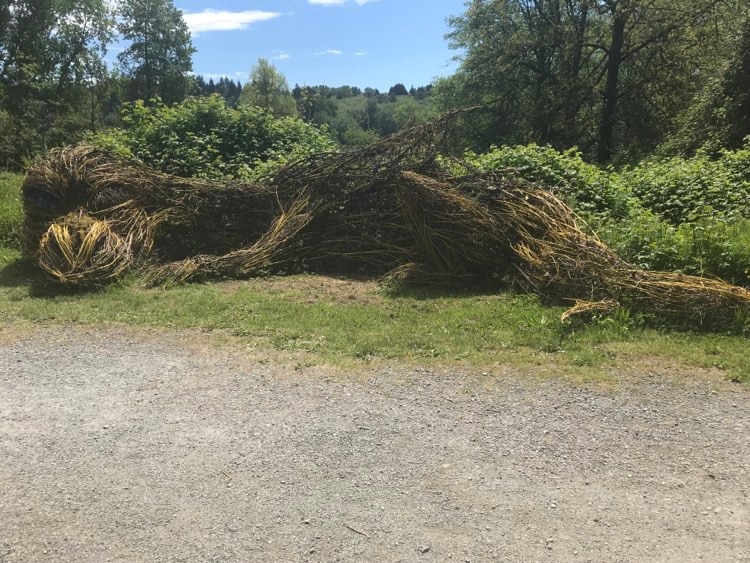
Enough about Week 1: Let’s talk a little about the long weekend! I went with my friends for a walk around Burnaby’s Deer Lake and imagine my surprise when I discovered that Burnaby is hosting a month-long event BURNABY BLOOMS: ECO-ART! 


This was so cool to see and really got me thinking about the many disciplines that exist in the garden. This was a clear example of Arts meeting science, and gardening. I am certain Jo from the Orchard garden would have us write a poem about these fantastic beings, and I am sure Susan would make them musical! Moreover, I think there are applications to language, culture, drama, physical and health education, Applied Design, Skills, and Technologies, and likely every subject in our schools. What a neat run-in! Anyways, that’s it from me for this week. Enjoy the Long Weekend! 


Thursday, 19 May 2022

CFE Day 4

  This is Caelan and Lexie here, sharing a bit about our action packed day at the Orchard Garden CFE. We were lucky to have such beautiful weather while we were busy exploring Nitobe Garden, planting tomatoes and painting signs for the Orchard Garden. 

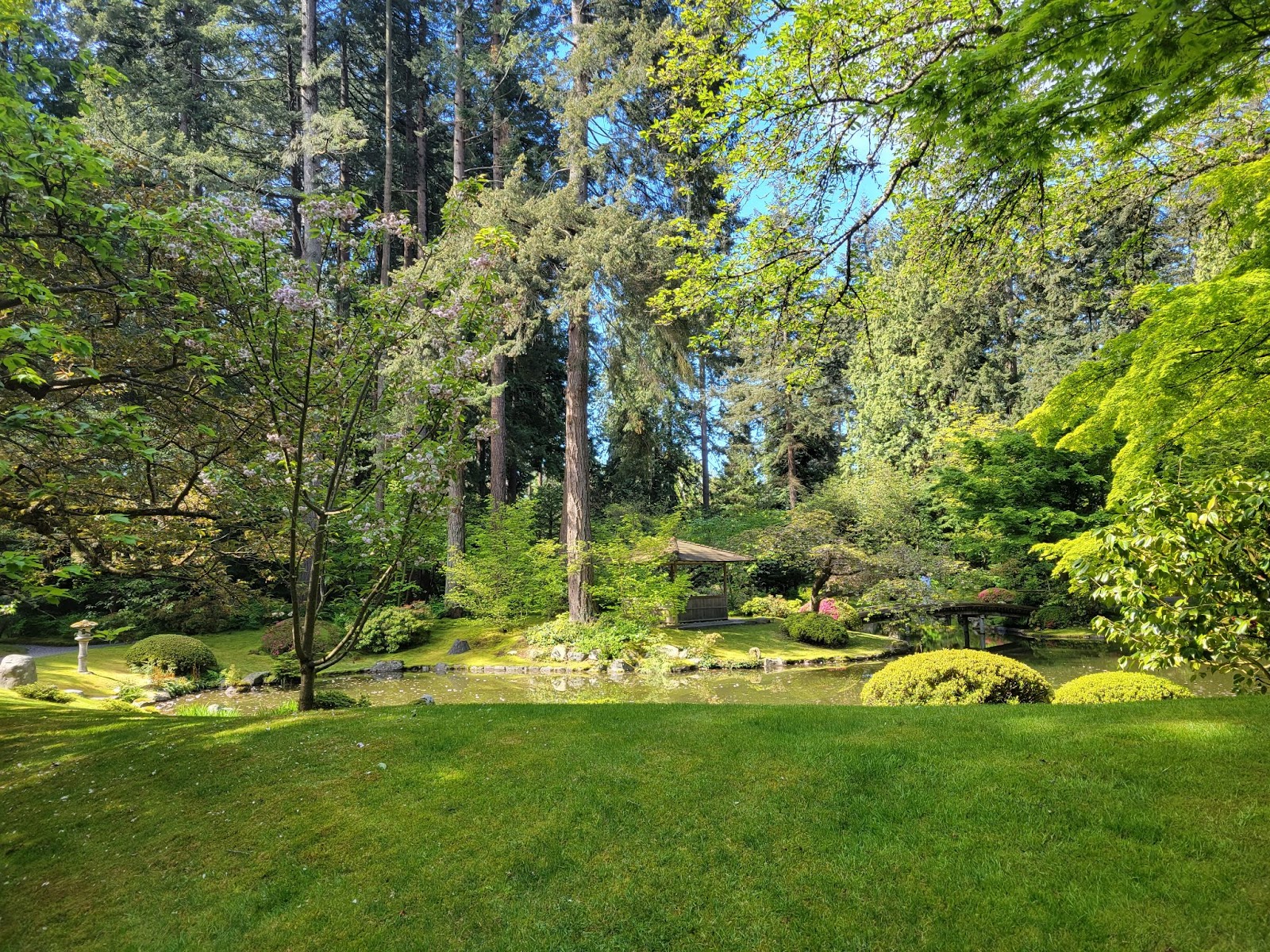
A picture of Nitobe Garden that Lexi captured on this beautiful morning.


We started our day at Nitobe Garden, where PhD candidate Tsubasa guided us through a tour of the garden. Following the week of perceiving gardens as a place to cultivate plants with a purpose, we were impressed with the Japanese gardening philosophy that a garden is a work of art that reflects one’s walk through life. 


Lexi standing in front of the “Father Lantern” in Nitobe Garden.


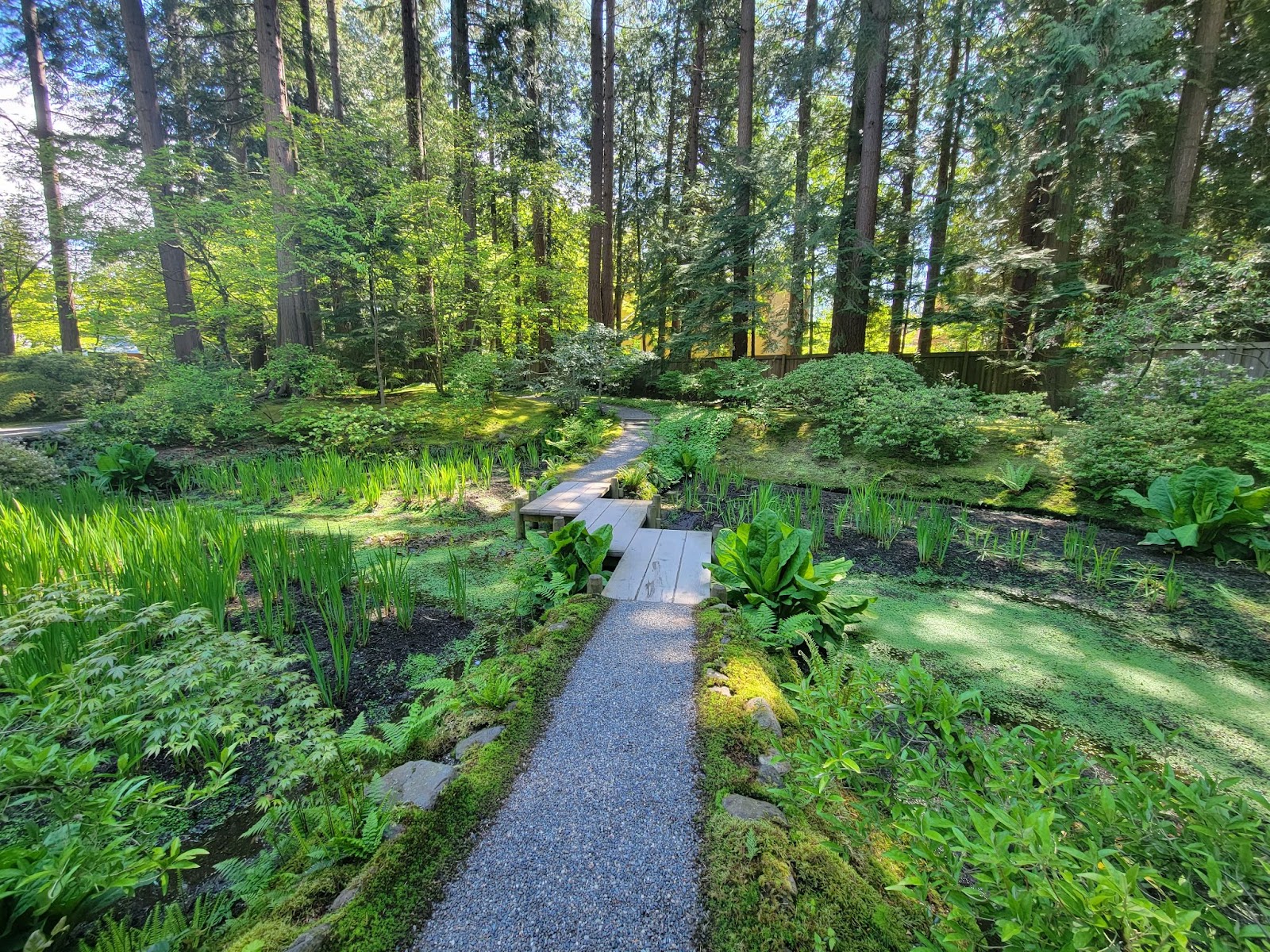
The first portion of the garden we walked through was an impression of childhood. The plants and fixtures in this section are very tall, meant to make the people walking through feel small by comparison. Following a very large stone lantern built to memorialize Dr. Inazō Nitobe, who the garden commemorates, is a fork in the path. Walking straight one traverses a flat bridge surrounded by greenery, but taking the “harder path” leads the onlooker over stone steps next to a scenic waterfall. The garden tells us that taking the riskier or more complicated path can have a beautiful reward. 


When the paths converged we came across what was Lexie’s favourite view in the garden…


The trees get shorter as we enter the “teenage” part of the garden where soon we come to another diverted path. On the left is the “bridge of early marriage” and next to it is a bridge representing getting married later in life. These bridges follow a Japanese belief that demons can only walk in straight lines. The bridge of early marriage is straight meaning that if one isn’t prepared for this decision, you may be bringing demons along with you. The second marriage bridge is structured diagonally so the demons cannot follow into that relationship. We were all impressed by how much symbolism the garden contains! We found ourselves in conversations about philosophy and life as we continued through the garden.


The rightmost tine of the fork goes to a dead end, representing the errors that we make when we are young, but that it is possible to turn around and choose a better path. 


The last part of the garden is where we find a nice resting place, representing older age. It was also interesting to learn that as Dr. Nitobe himself got older he became more interested in combining the eastern and western worlds and this is represented in the garden. At the beginning, the plants are more native to the Japanese climate and as we walk through the garden there is more plant life local to the west coast. 


We were both very inspired by this presentation of a garden. It specifically does not have any fruiting or herbaceous plants that are designed to consume. It is a work of art, and a story. It is natural but also highly curated. 


As English teachers we considered the possibilities of touring this, or other Japanese gardens and learning the stories that they tell, and then asking students to reflect on what their life would look like as a garden. What plants would be there? What stories would it tell? Upon doing some reading I learned that Japanese gardens are supposed to separate you from the chaos outside its walls, and this can also be a useful idea for students who can have a hard time finding peaceful moments in their tumultuous lives. 


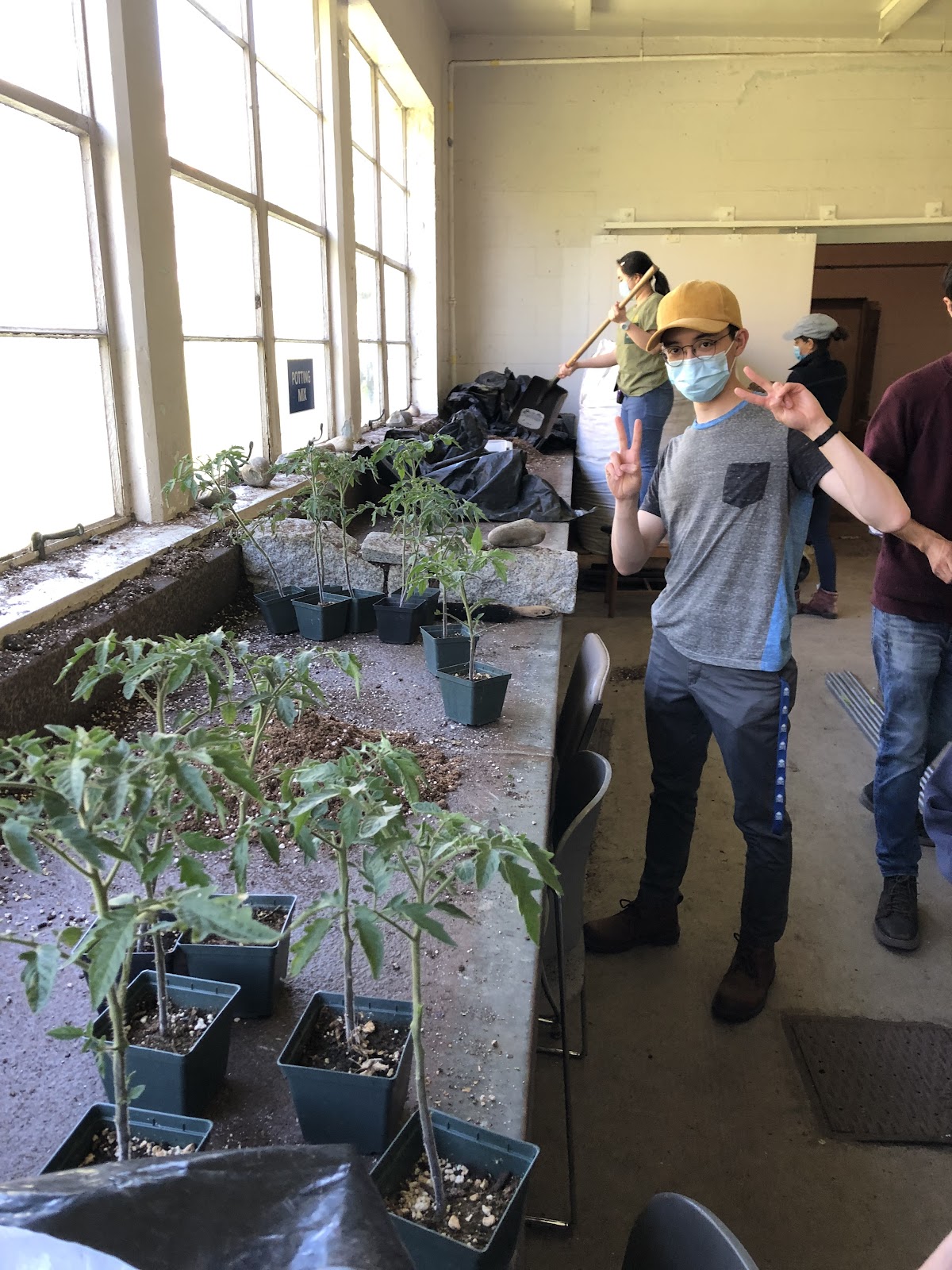
After lunch we reconvened at the UBC Greenhouse. Although I (Caelan) have been a UBC student for 6 years, I have never had the opportunity to go inside the greenhouse. It is warm and filled with so many beautiful plants! After the Orchard Garden Guardian, Chris, gave us instructions on tomato up-potting we got to work. Up-potting is the process of moving plants into bigger pots to accommodate their growing roots. Throughout this process we learned about soil moisture, maintaining root integrity, and how to avoid some potential plant diseases. 


Leo in the greenhouse ready to up-pot some tomatoes. 


As social studies teachers, we see value in involving students in the process of growing and caring for plants that produce the food we eat. For many people, their connection with food starts at the grocery store. When students are able to see the effort and care that goes into food production, students gain insight into the lives of agricultural workers and the supply chain process that affects the food we eat.


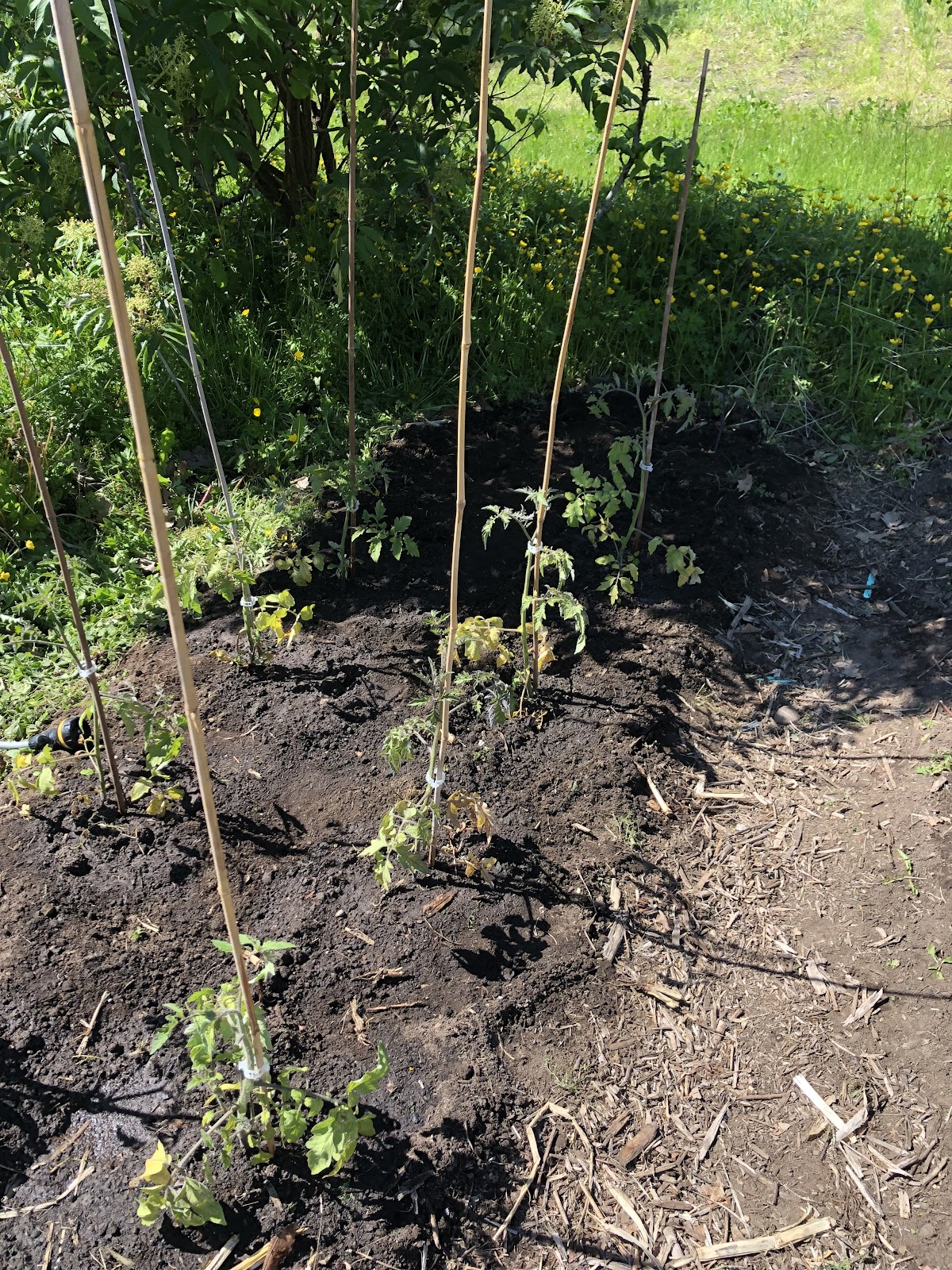
Tomatoes that we planted today at the Orchard Garden. 


Later in the day our group split up to either paint signs for the garden (pictures to come in future blog posts), or plant tomatoes in the garden beds. While planting tomatoes, we learned a new piece of vocabulary from Chris. This new term is adventitious roots and it refers to plant roots that form from non-root tissue. In the case of the tomatoes, it was referring to roots that may grow from the part of the stem that was buried under soil. Despite being in a diverse group of Teacher Candidates, this term was new to most of us! This demonstrates the endless learning opportunities that life in the garden presents.


Ted Tetsuo Aoki's short essay, Bridges That Rim the Pacific


Today, at beautiful Nitobe Gardens, I remembered that there was a short essay about 'bridges' written by the famous UBC and University of Alberta curriculum theorist, Dr. Ted Aoki, and that I had heard that this essay referred to a walk in Nitobe Gardens.

I found a version of this 1991 essay in a book available as an e-book from the UBC Library -- Curriculum in a New Key: The Collected Works of Ted T. Aoki.

Here is a link to this evocative 2-page essay that talks about Dr. Inazo Nitobe and his wish to bridge East and West, to be a bridge across the Pacific Ocean. The essay also talks about one of the bridges in Nitobe Gardens (the zigzag 'bridge of marriage at the appropriate age', I'm guessing), and describes it in a time of year when the irises are blooming.
Nitobe Garden zigzag bridge with the irises blooming.
Photo credit: Daniel Mosquin, Creative Commons Licence, UBC Botanical Garden 

Wednesday, 18 May 2022

CFE Day 3

Vivienne
After coming down with a bit of an illness, I was unable to attend today’s Soundscaping workshop. However, I’d love to speak a little about our first two days at our CFE, although my fellow TCs have already done an incredible job!

Having not gardened since I was a child, I was a little worried that all the weeding skills my mom and grandparents imbued on me would have been totally lost over the years. However, they quickly came back under the guidance of the Garden Guardian, Chris. Both Monday and Tuesday opened with Susan’s accordion stylings, paired with (what I would call at least!) mini history lessons on Old English farming practices and songs. These little musical moments helped us both to start our day and created a bit of an instant-bond when most of us (barring the ever-musical Gio) were challenged to sing-along to a completely unfamiliar tune with a group of people we might not know all too well yet. To me, this brought me back to the lighthearted and silly joy of singing as a class in elementary school. I can completely see how this might be a playful strategy to break the ice in the first opening days of class, whether that be when we have classrooms of our own or when we return to our UBC courses in June! 

On our second day in the Orchard Garden, Jo took over and led us on an eco-poetry workshop. Under her instruction, we connected with the different parts of the garden that called to us and tried to call back to them. I was particularly struck by the Princess tree and wrote an ode to this beautiful, if distant, globulous entity. In writing this ode, and in talking with the rest of the group, I was brought back to my unit covering Pablo Neruda’s Odes to Common Things during my practicum. As someone who deeply resisted any sort of tactile/physical learning as a highschool student, my time with Jo and the rest of the group challenged these hesitations. During my practicum, I saw just how valuable this kind of learning is as so many of my students responded to the ability to get up and moving. Being with Jo and the rest of the Orchard group further cemented the value of this learning for me as I saw myself making deeper connections with what surrounded me as a result of interacting with it directly. It’s my hope that should I be able to use my Neruda unit again that I will be able to take students out into the world, or even on a field trip, to facilitate their own creation of odes to what is common. 

Leo:
Today, we had some fun playing with (technological, human-made, natural) sounds under the direction of Diana Ihnatovych. The weather channel’d predicted rain but, alas, we were blessed with a pleasantly-cloudy continuation of this curiously cold May. And so we ventured out into the great urban yonder, armed with not but a mighty writing utensil, a sheet of paper, and our ears - and we listened.

The world seems quiet when we do not listen. Only when we lend the world our ears do we realise how loud it truly is, everywhere and all the time. Two plane engines. Chickadees, sparrows, crows. Text alerts. A water fountain. Footsteps. Skateboarders. Wind. Someone calling their friend sexy. All part of a symphony to rival Beethoven’s 9th. 

And so, we visualised these sounds. How? This we all did differently. I drew pictures, literal signifiers of the sources of all those noises - a tree, a bird, water, shoes. Others represented through shapes and linework, like the peaks and valleys of an ECG rhythm strip, or the chaotic results of a lie detector test.

When we were all finished with our individual observations, we separated into two groups and created soundscapes, shapes and colours on chart paper to trace the path of all the noise of Point Grey Campus. The groups went in very different directions, both equally rewarding, equally evocative.

The first (my group) drew somewhat of a more literal sort of landscape, albeit with an abstractedly metaphorical twist: we visually “rewilded” this gloriously grey campus of ours (it is, after all, Point Grey) by turning all the sounds we heard (jet engines, phone notifications, footsteps, oddly flirtatious cross-avenue greetings) into natural beings (thunder, a songbird, deer steps, tall grass). We invited our audience to touch any section of the landscape, and we recreated the respective sound: a choir of five come to turn the deserted front hall of Scarfe into a cacophonous amalgam of the great outdoors. 

The other group created, essentially, sheet music: arrows, waves, loops, spikes, stars, lines, dots all came together to build a score for voice and body. They used markers, crinkling paper, whistling, whooshing, and tapping all at once to weave a tapestry of nature, technology, and humanity. 

I’m a musician myself, and fascinating it was to think about noise as music - the hum of air ventilation, the roar of an airplane - a John Cage-ian dismantling of preconceived understandings of what, and what doesn’t, constitute(s) music. I considered the possible crosscurricular applications of this sort of activity: the poetic, literary, scientific, ecocritical, biological, artistic, linguistic, and musical. I would be curious to see how students of all ages would take to this sort of undertaking.

After lunch, we gardened. The sun came out to help us along in our great endeavor to transplant some tomato plants from greenhouse to ground. We harvested some kale, ate some kale, discovered that yellow kale buds taste oddly like broccoli, found some slugs, saved them from death-by-shoveling, and homed some soon-to-be tomatoes in the dark, rich soil. Being in the garden has been a wonderful break from the go-go-go of practicum, the endless observations and planning and extreme lack of a work/life balance. The garden is patient, and it requires of us all a patience found little elsewhere in this chaotic world. 

Group soundscape 1:


Ground soundscape 2:


Caelan and Lauren's soundscapes:


Tomato plants:


Gardening:


 I'm glad you enjoyed, and wish you all well for the rest of this experience!

Here are my preparatory notes for yesterday's eco-poetry workshop. 

Enjoy!

Jo


Eco-poetry workshop in the Orchard Garden

May 17, 2022 


The aim of this workshop is to: 

explore what we understand by eco-poetry 

experiment with an array of eco-poetic activities, and consider how we may draw from these in our teaching

consider the role of a gardener and beings in and around the garden.


Eco-poetry?

Let’s begin with what we already know about eco-poetry; and how this may connect with various subject areas ...


Eco-poetry: 

has a strong ecological focus and is about the desire for creating change

is nature poetry that imagines changing the ways people think, feel about, and live and respond to the planet

supports a poetic, cultural, and spiritual orientation to life

explores interconnectedness between humans and non-humans and gives voice to more-than-human worlds

considers the possibilities of renewing our commitment to places such as The Orchard Garden through a multiple literacies lens. 


Activity 1: Encountering beings in the garden 


Aims: explore how being outdoors can enhance writing and make writing poetry enjoyable; consider beings living in the garden.


Wander around the garden and stop by a being who calls to you! This could be a tree, a plant, a bee … What do you think I mean by call to you? Draws your attention, catches your eye … 

Connect with this plant for about five minutes, sitting or standing or moving nearby; no writing just observing, maybe closing your eyes, smelling, letting its leaves brush your skin …


Write words to describe your experiences of being with this tree or plant, e.g., create a word-bank / bevy, gathering, collection, group … to describe what you see, smell, sounds, colours, shapes, textures, movement, gestures, feelings …


Each person shares their words, gestures, acts movement …


With this knowledge of another being, we’re going to create a praise poem or an ode inspired by mentions of Odes in yesterday’s workshop. Experiences of teaching odes before? 


An ode comes in many forms – short, long, rhyming, nonrhyming, but a key characteristic is odes celebrate a being, tree, plant, person, place ... 


Odes often begin with “O Picnic Table …!” and consist of 4-lines, flamboyant, meditative, something else. 


3-5 minutes to write an ode. 


Share.


Discuss possible ways to adapt this activity for different subject areas & ages …?

Various poetic forms, e.g., haiku with 5-7-5 syllable pattern, Fibonacci sequence poems, Bridges Math and Art …


Activity 2 – Encountering voices in the garden


Aims: Eco-poetry helps us to take a fresh look at life; consider the garden from different perspectives and multiple literacies. 


Writing in ways that do not place human interests at the centre helps to shift attitudes and make room for wonder. Rich in many languages, only a few of which are human, eco-poetry gives voice to the languages of trees, plants, oceans, clouds …


These beings speak to us and may even gift inspiring messages as to how we might move forward. 


In pairs, create a call and response poem between a being, e.g., a bee, tree, plant and a gardener. Person 1 imagines being a tree, plant, bird, bumble bee, shed …; and person 2 a gardener.

Person 1 calls, and person 2 responds. 

A call? Could be a question, a surprise, a random happening, advice, a complaint …

A response? Could be an answer, another question or happening … 


Write three verses, with between 2 & 6 lines in each.


Consider layers in the garden – beneath the soil, mostly unseen roots; the ground; air and skies above …


Show image of different spheres, and where gardener is in relation.


Activity 3 – Bringing wonder to the wider area


Aims: Explore how the Orchard Garden brings wonder to the wider area through the voices of at least three beings.


So often I consider the garden as an oasis surrounded by an encroaching campus and want to give voice to more complex relations with the help of beings who live and travel among the garden and surrounding areas. 


For example, a poetic conversation between comfrey bell flowers, bees travelling across campus, and the Scarfe Building … 


Let’s go for a walk near to the garden and encounter beings living there. Consider living connections with the garden … 


Consider ways in which eco-poetry makes environmentalism happen, influence of stories about a place, patience, humour … 


Eco-poetry provides both a healthy way to respond to issues we care about, as well as thinking creatively about words and the worlds we create.


In groups of 3 or 4 write a poem or a poetic conversation in response to our walking experience, and share!