Wednesday, 18 June 2025

Some math in the garden resources


George Hart and Elisabeth Heathfield’s
Making Math Visible website, including instructions on making a model of our hyperboloid gates (designed by George and built collaboratively):

https://makingmathvisible.com/

Instructions:

https://makingmathvisible.com/Hyperboloid/Hyperboloid.html

And here is a short film George made about the gates in the UBC Orchard Garden:


https://www.simonsfoundation.org/2014/11/14/mathematical-impressions-curved-and-straight/

*****

We can track the path of the sun in the sky with our bodies, here in Vancouver at 49° North latitude, or wherever we happen to be!

Here’s a video of an activity like the one we are trying out today, and a handout from that workshop. Video direct link: https://youtu.be/ZZ0dlGvcpkM?feature=shared

Many thanks to astrophysicist and physics educator Benoit Pfeiffer for initiating this activity, and to UK mathematical artist Nick Sayers for teaching us how to do 6 month solargrams.


Here is Justin Quinnell’s how-to video on making a six-month pinhole camera: https://youtu.be/wtZOWEB_wcI?si=DivFPQSNCGD_viaB

… and a gallery of these kinds of images: https://www.brightonandhovenews.org/2015/06/10/pinhole-cameras-trace-ghostly-track-of-sun-across-brighton-and-hove-sky/

Below: Six month (solstice to solstice) pinhole camera solargram of the sky to the south of the UBC Orchard Garden, from summer to winter solstice.


Tuesday, 17 June 2025

Tuesday, June 17, 2025 - Morning at Nitobe Memorial Garden and Afternoon at UBC Orchard Garden


We spent a peaceful and relaxing morning strolling at Nitobe Memorial Garden, an authentic Japanese garden which UBC Botanical Garden is stewarding and which is part of UBC Faculty of Science. It has Pacific Northwest native trees and Japanese trees. There is an authentic teahouse in which tea ceremonies are sometimes conducted. This beautiful garden gave me insight into Japanese culture for which I am grateful. Here are photos I took at the garden.


After our visit to Nitobe Memorial Garden, we went to Scarfe building to finish planning for this Thursday’s nature based activity which we will be conducting at Norma Rose Point Elementary School. We spent the afternoon at UBC Orchard Garden transplanting brussels sprouts and watering Garry Oak Meadow, Three Sisters, Food Forest, transplanted tomatoes, and transplanted cucumbers. It was a productive and enjoyable time spent working together. Gardening is new to me so I am grateful to have learned new gardening skills over these past few days. 


Winnie


Connecting with Nature: From Nitobe Garden to the Orchard Garden


In the morning, we began our day at the UBC Nitobe Memorial Garden, one of the most authentic Japanese gardens outside of Japan. As we strolled through the garden, we were struck by its calming and peaceful atmosphere. It’s early summer, so the landscape is lush and green—but I imagine it is equally beautiful in other seasons: cherry blossoms in spring, golden leaves in autumn, and snow-covered scenes in winter.


The Nitobe Garden serves as a bridge between Japanese and Western cultures. Designed in the traditional Japanese style, both architecturally and in its landscaping, the garden is a space of reflection and harmony. A highlight is the Japanese tea house, where visitors can attend formal tea ceremonies at scheduled times.

In the afternoon, we returned to the orchard garden to tend to our vegetable plants. The tomato and cucumber seedlings we planted last Thursday and nurtured with extra care yesterday looked noticeably healthier today. Some of us watered the tomatoes, while others prepared garden beds for future plantings, and even had the chance to plant a few Brussels sprouts. Our garden is becoming more vibrant; the raspberries are starting to ripen. 

I was once again reminded of the effort that goes into growing even a single plant. From weeding and soil preparation to daily care, gardening is a time-intensive and thoughtful process. We were disheartened by the condition of our tomato plants yesterday, but seeing their recovery today was a powerful reminder that growth takes time, patience, and care. More than anything, this experience deepened our connection with the natural world—a meaningful learning outcome from our time in the orchard garden. 

By Zeynep :) 


June 16 -Morning at MOA


In the morning we got to go to the MOA, Museum of Anthropology on

campus. We got to see some of the new exhibits by Anishinaabe artist Rebecca Belmore. The pieces were focused on colonialism and the direct impact on Indigenous communities. It is important to me that in my work as a future educator I am always amplifying Indigenous voices, and a way I have done this is through bringing in stories and art by Indigenous authors. 


At the garden we have been given the opportunity to try rope making, and some of us have tried weaving as well. At the Moa there is a lot of beautiful woven baskets and art pieces done by Indigenous people. I will attach at the bottom some pictures of the signs by the baskets so that you can read a bit more about it. It shares how different materials were gathered to make the baskets and this I connected to how we used different natural materials to make rope. These baskets were so intricate and beautiful and when I looked at it I thought of all the hard work that went into each piece. I also thought about how the materials would need to be gathered to make it and how much time, love, and effort went into each one. 

Monday, 16 June 2025

Afternoon of Gardens on Campus

  1. Roots on the Roof

To start off our afternoon today, we visited the “Roots on the Roof” garden on the rooftop of the AMS Nest. There, we met with Andy who gave us a tour of the garden and introduced us to their purpose and plants! 

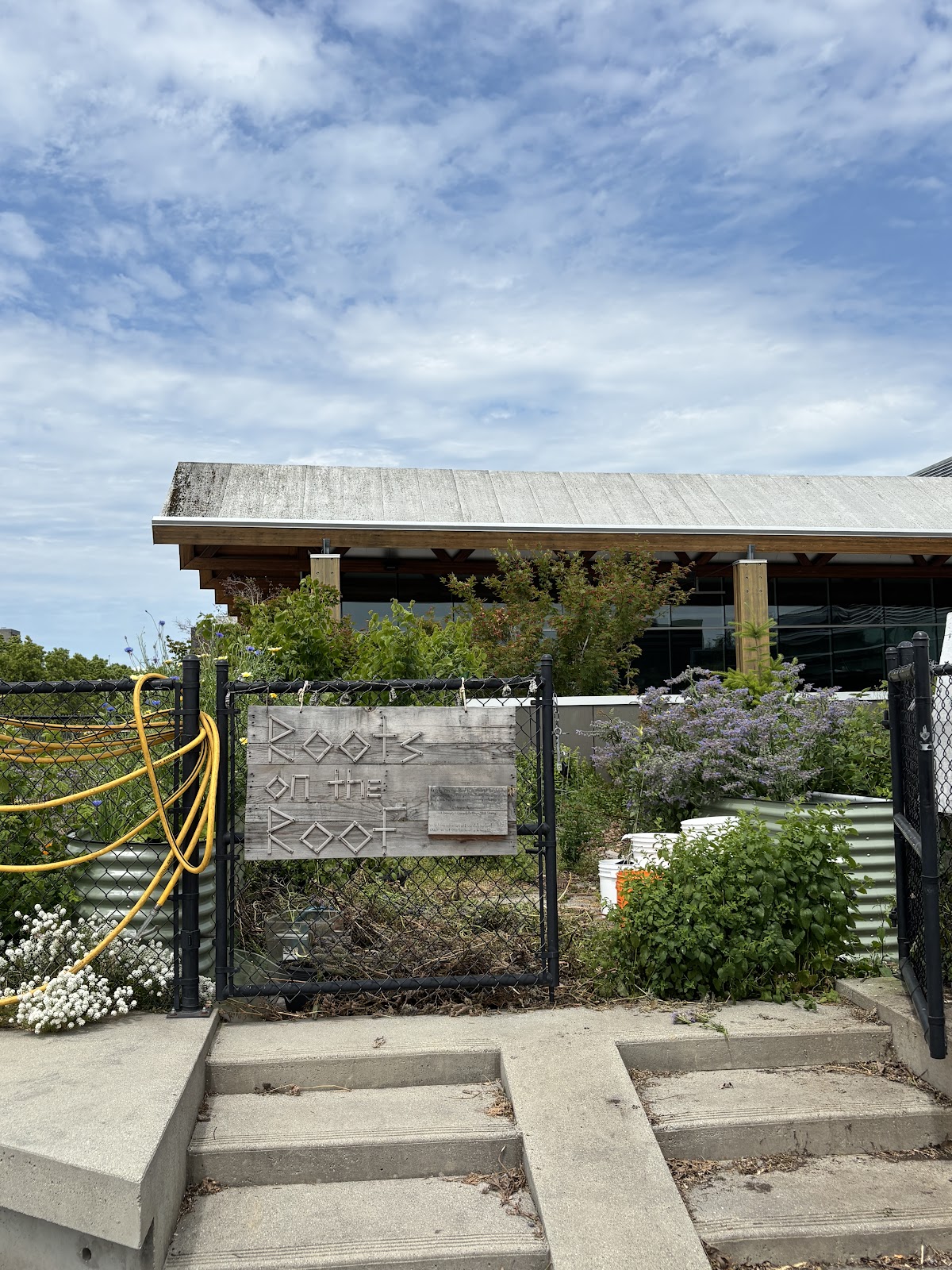
Entrance to "Roots on the Roof" garden and sign About Roots on the Roof:

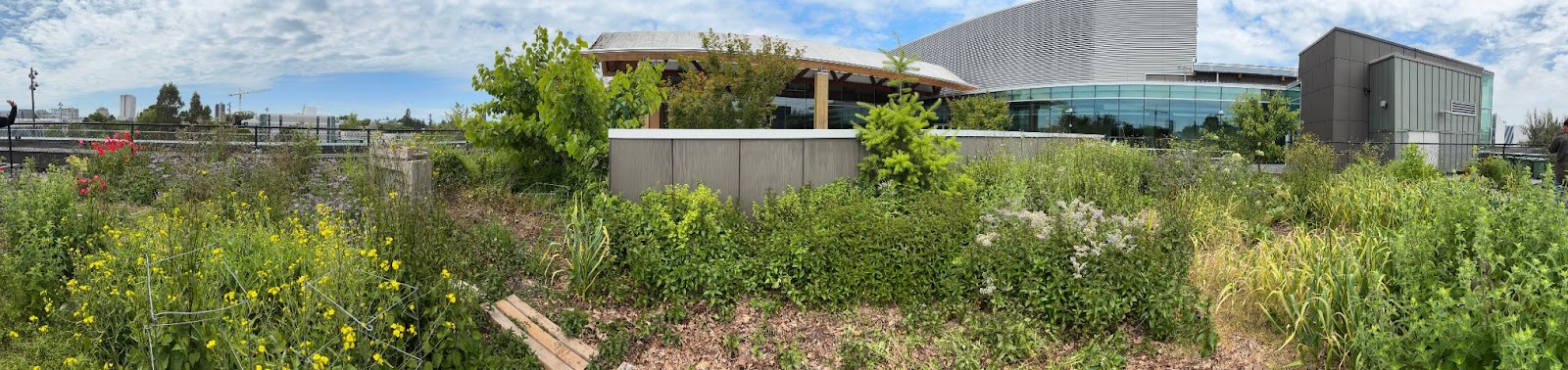
Roots on the roof is a student-led club that manages the rooftop garden on the AMS Nest.  It was founded in 2014 as an offshoot of the Orchard Gardens that was in the space now known as the Orchard Commons. The soil was cultivated by the Indigenous peoples so it is very rich and filled with organic matter. Part of the soil was moved to the Roots on the Roof garden. The garden has many different native plants that constantly grow and cover the soil, protecting it. Some plants in the garden include tomatoes, poppies, melons, and even a mulberry tree and cherry tree. The garden’s focus is on food sovereignty and keeping organic food as accessible as possible. Produce is weighed and sent to the AMS to be put in the Sprouts fridge. 

Panorama image of Roots on the Roof Garden

Chocolate mint leaf and plant They had chocolate mint in the garden! As a hardcore chocolate mint flavour fan, I was absolutely hooked on the sweet and minty scent. 


  1. Quick visit to the Permaculture Garden


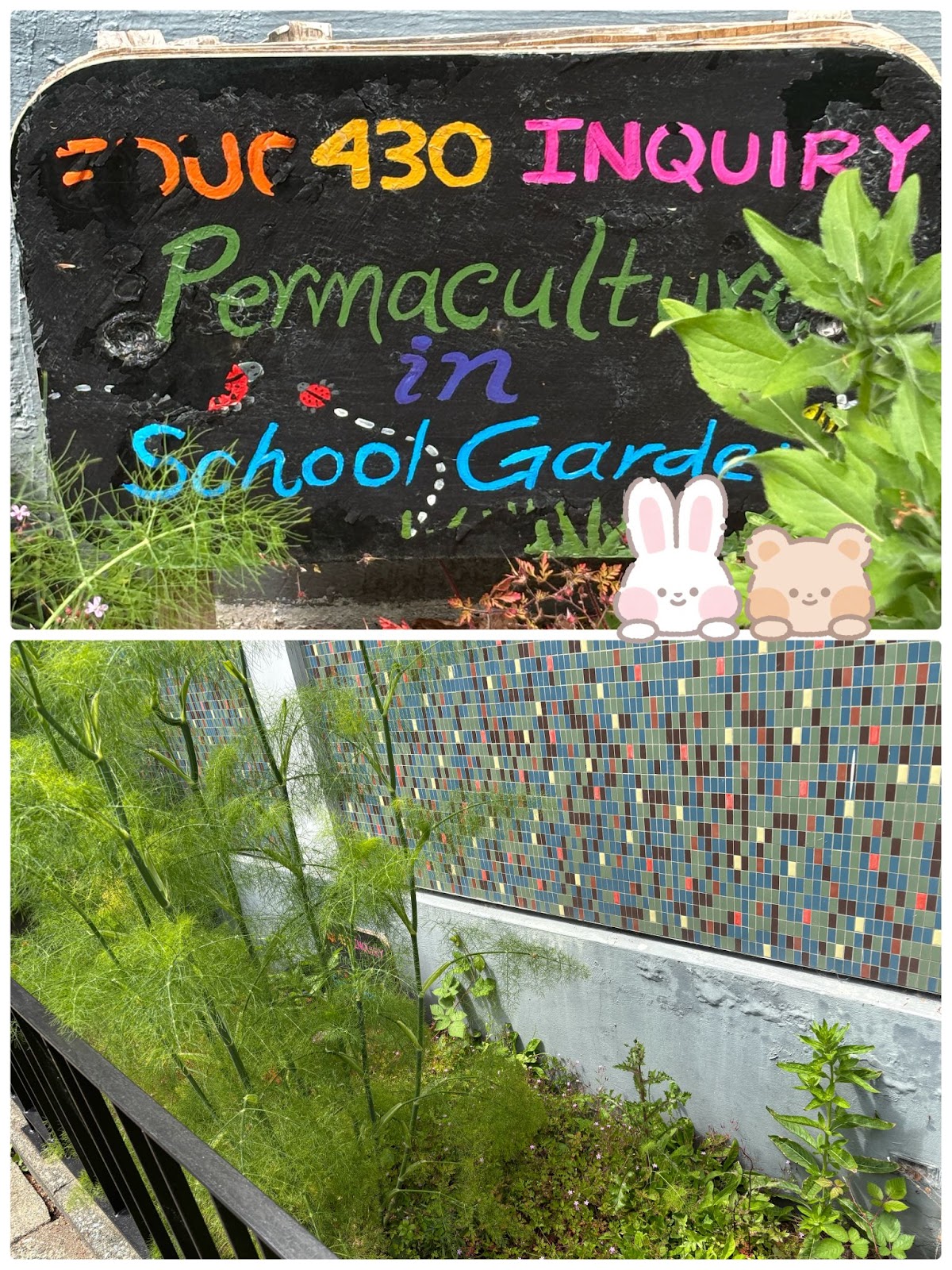
Scarfe Permaculture Garden On the way back to the Orchard Garden, we stopped by the south side of Scarfe to see how the permaculture garden was doing. 


  1. Work party and plant rescue mission

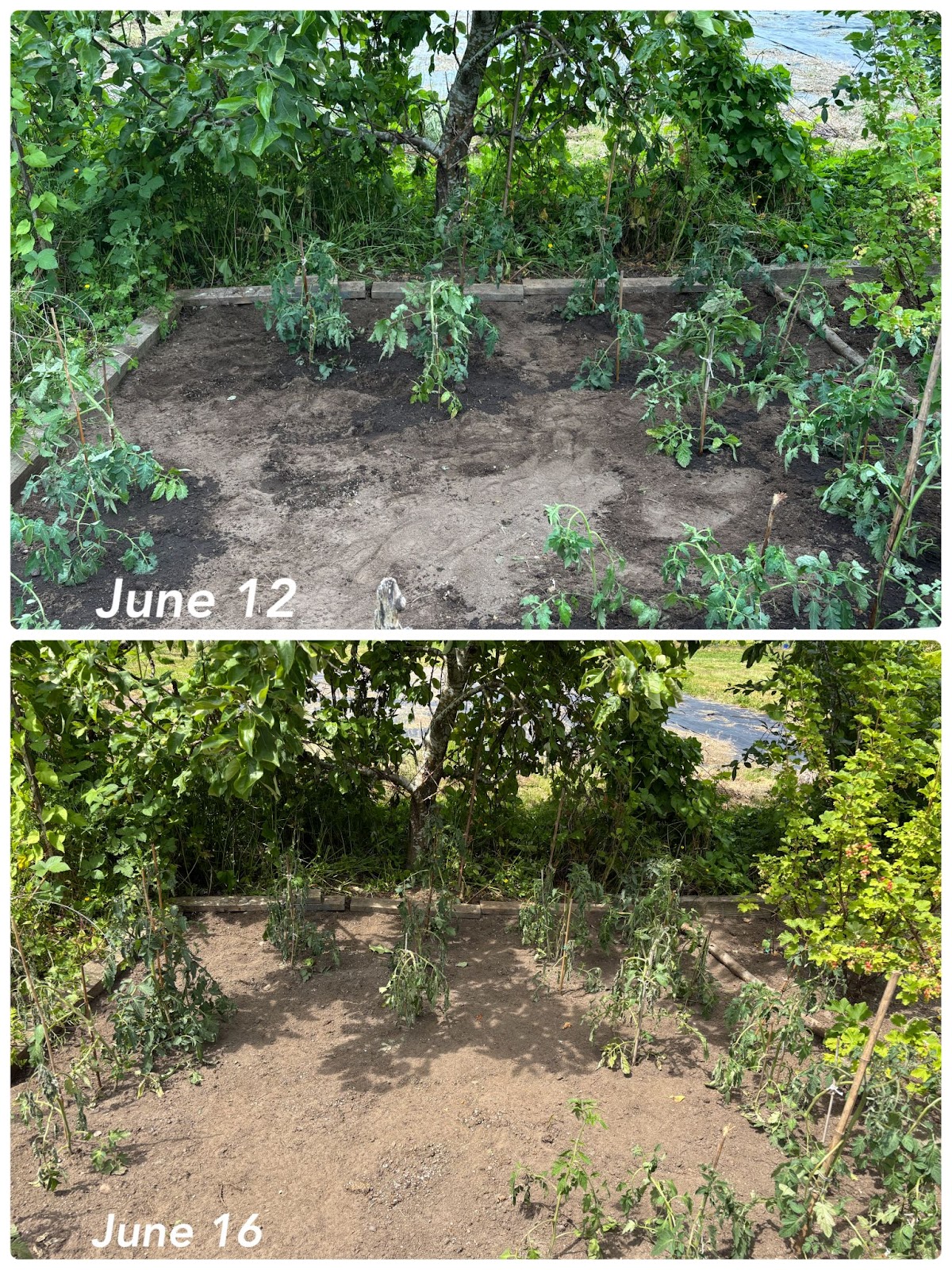
Tomato plants at the Orchard Garden on June 12 and June 16 The plants from Thursday were in dire need of TLC. We had not been able to water since we were away on Friday, and they were unable to get water on the weekend. Today, we focused on giving the plants lots of extra care and water! 


Friday, 13 June 2025

Miyawaki Forests

Today, we had the chance to check out some really interesting Miyawaki forests with the CFE group. For those who don’t know, Miyawaki forests are mini-forests that are planted super densely. They are often 100 square meters in size and are packed tightly with native plants. Each square meter includes one big canopy tree and at least two smaller plants or shrubs. They dig down a meter to loosen the soil before planting and then mix it with compost before putting it back in. We learned that plants grow way faster this way than in typical forests because the plants' roots can quickly reach ground water in the loosened soil and they shoot upwards rapidly as they compete for sunlight with all the other plants. Everyone we met was so knowledgeable, and they're all doing awesome things in Richmond schools to create ecologically diverse, beautiful, and educational spaces. We learned so much and had an amazing time exploring these awesome mini-forests!


Richmond Secondary:

The Miyawaki forest at Richmond secondary school, planted in November 2022, is a beautiful 100 sq meter mini-forest filled with only native plants. Some plant species include black cottonwood, douglas fir, oceanspray, thimbleberries, red currant, and stinging nettle, which has grown up to 2 meters tall. In time, the evergreen trees will push up through the other plants and create a tall canopy above. Students help maintain the forest by pruning pathways. There are several resident bunnies running around the forest, which was a very cute surprise. The space provides an important opportunity for education, as students are able to study plant names, measure growth, discuss medicinal qualities, and practice being stewards of the forest. There is an outdoor learning space with logs and rocks for students to sit on. The forest requires minimal watering, as the roots now reach groundwater. This was a really cool example of how much a pocket forest can grow in just a few years.


Errington Elementary

The Miyawaki forest at Errington elementary school is just getting started. It was created this year after 3 years of fundraising and it was dug by hand by students and staff. This beautiful little future-forest is raised slightly above ground level, meaning the softened soil extends a little more than a meter deep. Wildflowers have been planted around the edges to give the forest a bright and welcoming look. As this forest continues to grow, it will include a willow tunnel, where densely planted willow trees will create an archway students can walk through. In future, QR codes will be placed by the plants for students and visitors to learn more about the plants.


Garden City Park

This Miyawaki forest was planted on the edge of an existing group of trees in Garden city park. Because of the large volunteer turn-out, the garden was planted in around an hour and they were also able to remove a lot of invasive blackberries at the time of planting. Forests like this are a great opportunities for nearby elementary students and members of the community to get involved in caring for the land.

Thanks again to everyone who showed us around today! I think I can safely say we are all feeling very inspired by the amazing things that are happening in Richmond green spaces!


Thursday, 12 June 2025

Growing Community, Not Just Plants - Stacey and Manuelle

 We began our day with a video about a school garden at Our Lady of Perpetual Help. The story focused on a teacher who, with a mix of courage and hope, knocked on a neighbour’s door and asked if their class could grow pumpkins in his already thriving front garden. He said yes. What followed was a beautiful example of intergenerational community building—young students learning alongside an older neighbour, connecting through soil, seasons, and shared care.

This sparked a rich conversation in our CFE cohort about what’s truly growing in these gardens. We talked about how colonialism and capitalism often work to isolate us, cutting off our connection to the land, to our neighbours, and especially to generations outside our own. Gardening, we reflected, is about growing community, not just plants. That line stuck with all of us.

As we get to know each other and engage in these thoughtful and sometimes unexpected conversations, both Manuelle and I agree on how good it feels to be around like-minded people. There’s a real sense of energy and optimism in knowing that we are about to enter classrooms as future educators, carrying these values with us.


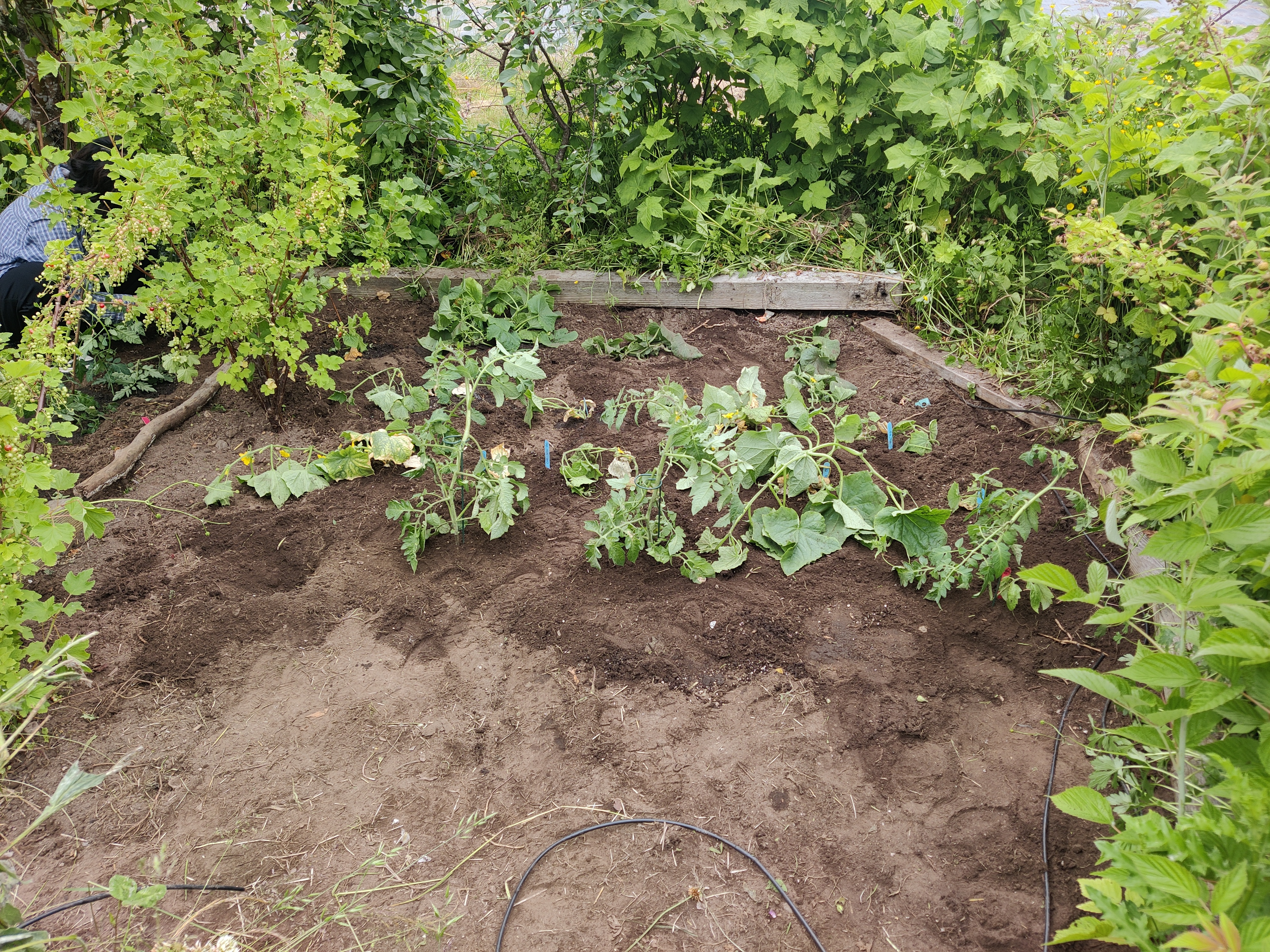
The afternoon was all about tomatoes and cucumbers. After two days of clearing, weeding, and prepping the beds, we were finally ready to plant. We picked up the tomato and cucumber starts from the greenhouse—their first home—and brought them to their forever home at the Orchard Garden. It’s wild to think that just a few days ago, this corner of the garden was overgrown. Now it’s full of promise.


What could have taken one person days and days of backbreaking labour became, through teamwork, two joyful afternoons of transformation. In about five work hours, we weeded, prepped beds, planted, and hand-watered. The shift in the space was immediately visible.

It reminded us of what’s possible in education when we come together. Just like in the garden, learning isn’t meant to be done alone. It’s meant to be shared through collaboration, encouragement, and collective effort. We lift each other, we learn from each other, and we grow something far bigger than ourselves.


Looking forward to the growth,
Manuelle and Stacey