Wednesday, 8 June 2022

Outdoor Learning at Homma Elementary - Gideon, Peter, Scott

Today we visited Homma Elementary School to see outdoor learning put into action. Sadly, our original host, Megan Zeni, was unable to make it to show us around today, but her co-creator, Sarah Regan was there to show us around, answer some questions, and lead some outdoor class activities.  Below is a photo of the outdoor "classroom", and its chalkboard (which hangs on the side a storage room which stores the classroom materials needed for the lessons student participate in.)


The classroom is located under some trees to provide some shade, but there is a newly built gazebo which you can see in the background of the classroom photo, and in the photo below. This gazebo is used on rainy days so students can still get some work done. 

The rest of the space is a carefully planned learning environment consisting of the raised garden beds, a bug hotel, a loose parts play area, a mud pit kitchen, picnic tables for arts and writing activities, and a second shed for storing the gardening tools.


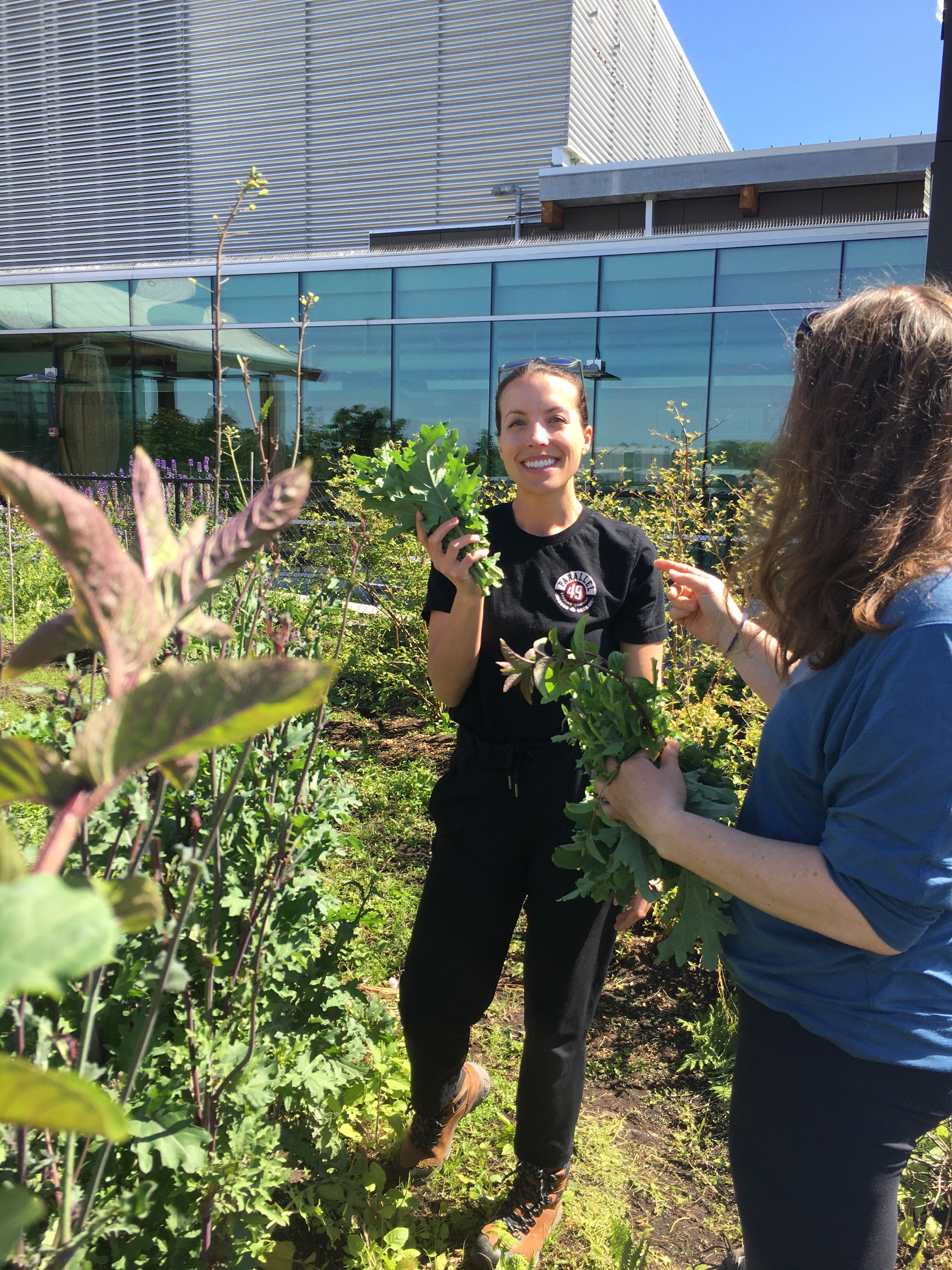
After we arrived, we observed and participated in two garden-based lessons with grade 3/4 students and the Teacher Candidates positioned at Homma Elementary. Our morning began with a student-led tour of the garden. Groups of students showed us kindness by leading an adult around the garden. What an amazing space it is. We got to see and experience lush planter boxes filled with kale, spinach, garlic, parsley, broccoli, cabbage, watermelons, radishes, carrots, lettuce, berries, apple trees, and much more. These plants are obviously shown tremendous care by Megan, Sarah, and all the students, because each crop was thriving...
...Except for the blueberries, they are a difficult plant to maintain.

After being toured around the garden, we got a chance to observe the students engaging in differentiated and risky play in the garden. During recess time, we gathered with Sarah and the TCs from Homma Elementary at the circle to discuss Sarah’s experiences as an educator in the garden. In particular, Sarah advocated for the benefits of risky play in the garden, sharing her experiences and noting how the students learn the capabilities and limits of their bodies in relation to their environment.
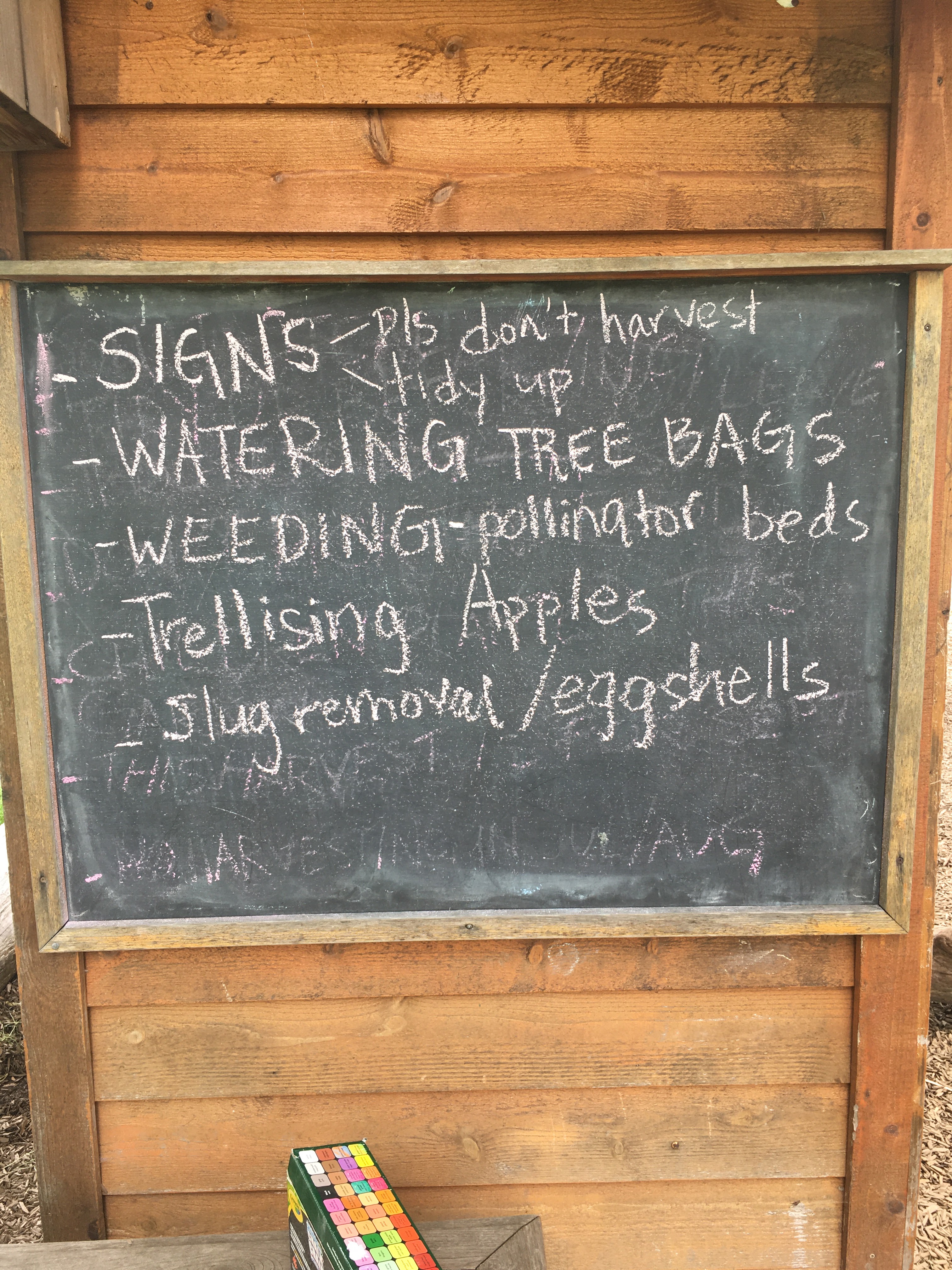
After recess, we met two more classes and participated in a garden work period with the students. Sarah gathered the students at in the circle area, created a to-do list on a chalkboard that included creating signs for the garden (See photos below), weeding, watering the tree bags around the cherry trees, trellising the apple trees, and relocating slugs from the planters to the bug hotel.

Takeaways:

Gideon
Witnessing the garden in action was an eye-opening experience, and there were several observations that stood out.
First, I was struck by how different this garden space felt from the garden at my practicum school. At my practicum school, the garden consisted of a circle gathering area along with several planters. These logs and planters were unshaded and adjacent to the basketball courts on one side and playground on the other. Students often gathered in this space for the beginning of PE lessons to get instructions. My experience was that students did not come to understand this setting as a desirable space to spend time, nor as an outdoor learning area; rather it was a transient place to gather prior to outdoor play. By contrast, Homma’s garden is a large, dynamic, and multifaceted space that invites you to spend time and offers structure and differentiated learning for all participants. The gathering circle area is separated from the playground by a shed, shaded by trees, and further separated by picnic tables and planters. This helped minimize distraction for whole-class instruction and provide structure to the outdoor setting.
The work period in the garden was also an authentic example of differentiated learning. Sarah set out a to-do list of activities and students had the opportunity to choose which activities suited their interests and abilities on that day. 
The energy of this “work period” was vibrant. In the outdoor setting students could simultaneously be “on-task” while moving their bodies and talking excitedly with a friend or quietly on their own. Not once could you hear the familiar refrain of a teacher calling for quieter voices. It is hard to recreate this experience within the limited space of the classroom.
Finally, it was evident that the garden is helping students to develop relationships with plants, animals, and insects in a way that I did not when I was growing up. My tour guides knowledgeably identified many different plants found in the garden and one student taught me about how to graft cherry trees. But at a more fundamental level, I witnessed students mindfully experiencing their surroundings, searching for insects and carefully touching different plants, and developing an early appreciation for non-human life.

Scott

In my practicum, there was a grade 1/2 teacher who had obviously followed Megan and her ideas on outdoor learning as the garden at Beach Grove Elementary is almost the same, minus the loose parts play area, the mud pit kitchen, and the amazing gazebo. 
I was impressed particularly but the inclusion of the First People's Principles of Learning on the "learning shed". I had assumed in my head that these were for the teachers to consider when planning learning activities, I really like the idea of presenting them and sharing them with students to get them thinking about learning outside of the "regular" perspective. 


I learned during my practicum the importance of being outdoors and the impact/effect it can have on student engagement when we had our science classes on the beach while learning about biodiversity.
I cannot say that I saw a single student today who was not "on task", each and every student seemingly knew the purpose of what their learning tasks were and were actively engaging in them. One thing which surprised me was that Sarah ask the students to engage in activities of their choice. I initially thought that this would lead to lopsided groups, but the students naturally able to make groups of appropriate sizes, and them immediately dove into their "work". The student truly enjoyed being there!

Peter

To watch the students and teachers of Homma elementary in their garden classroom is to experience learning in a way that is truly connected to place. Throughout my time at UBC, and in my own practicum, First Peoples Principles of Learning were stressed as a way to incorporate indigenous knowledge into my teaching practice and students' learning. The garden as a classroom not only honours these principles, but embodies them. 


To witness, and participate, as students and teachers learn from each other, while interacting and caring for the environment they were in, brought a sense of wonder and joy to me. These students understand their responsibilities to one another, their environment, and themselves in a way that truly was breathtaking to behold. They weeded and watered with understanding of their task. They played with logs and tires testing their own boundaries in a way that was safe yet pushed them to grow. Finally, while their tasks were structured, their experiences were their own to manage. 

My key takeaway from all of this is that education, whether in the garden or in the classroom, needs to take place in a safe and supportive environment. By creating a safe and supportive environment, where students are able to test their own boundaries, they learn to accept responsibility for their actions in relation to their environment and others. As part of the Middle Years cohort at UBC my teaching practice is based around the principles of fostering self-regulated learning, and I can see those principles embodied in the garden.


By keeping in mind the example of how the Homma Elementary garden classroom is built around the First Peoples Principles of Learning and student self-regulation I hope to infuse my own practice, indoors and outdoors, with its spirit.

Tuesday, 7 June 2022

Visiting Roots On The Roof! By Summer & Maggie

 
What thyme is it? It’s thyme for Tuesday’s blog post!


Today we started the day off at Roots on The Roof, a student-run garden club at the top of the Nest. The club president, Carly, shared with us the story of how Roots on The Roof came to be as well as gave us a tour of the place. We could not believe that an average of 800 pounds of food is harvested annually from the garden! This year, the food collected from the harvest will be donated to UBC Sprouts.


We also observed the effect that the past two years of the COVID lockdown have had on the garden. In the absence of humans, we learned that birds are quite the gardeners as they help disperse seeds throughout the garden and beyond. While we were tending the garden, we could see the impact of our collective effort, and how much love and attention a garden truly requires. We were in “amaze-mint” of how many different plants were being grown in the garden, such as garlic, broccoli, mint, borage, tomatoes, rutabaga, kale, snap peas, herbs, and wildflowers. Thank you Carly for allowing us to taste some! It's incredible how engaging with a combination of our different senses provides us with a whole other experience.


During our time on the rooftop, we realized how important garden spaces are for fostering a sense of community. Something that struck us was the idea that everything is interconnected or dependent on everything else! The garden taught us a valuable lesson on reciprocity. It reminded us that we have an important role in the continuation of our relationship with the land. A garden cannot be sustained if we only take from it without giving back. Reflecting on this experience, we can see ourselves using the garden as a social and emotional learning (SEL) tool to teach children about empathy, kindness, and responsibility. Today, we were able to lend a helping hand by tending to the garden, and in return, the garden gifted us delicious vegetables to take home! Some of us intend on replanting these in our own garden so that they will hopefully grow into new plants while others intend on using these as ingredients in our cooking!


After lunch, we regrouped at the greenhouse where we learned the process of sowing seeds with Chris, the Guardian of the Galaxy Garden. Together, we filled our containers with soil, watered them, and planted the seeds in accordance to their individual care instructions. We planted spinach and basil, which we are so excited to see if they will sprout! We also made a connection to Brayboy and Maughan’s text, "Indigenous Knowledge and the Story of the Bean", in which from reading, we learned that we have to be very careful to make sure that every decision we make is thought about before we act. In this case, we do not just plant a seed just because; it has to have a purpose.


We both can see ourselves incorporating this activity in our classrooms as it is accessible to all learners, hands-on, and takes learning beyond the confines of four walls.


Finally, we transported more tomato plants to the UBC orchard garden. Yesterday, we uprooted some diseased tomato plants, and it was so interesting to see the difference between healthy and diseased tomato plants. Chris was very helpful in reminding us about the precautions of uprooting diseased plants and how to introduce new plants from the greenhouse to the garden. It reminded us of how one would introduce a pet goldfish into its new fish tank. Although plants can be robust, we were intrigued with how much care and attention each plant needs and how different plants require unique care. For the remainder of the time, we prepared the garden beds by doing some much-needed weeding. We found the tall strands of grass to be more difficult to weed as their roots were deeply intertwined beneath the surface of the soil. Reflecting on this experience, we realized that gardens can be used as a tool to teach children to persevere. “Thistle” be a continuous project for us in the coming weeks... wish us luck! 🍀


Monday, 6 June 2022

Our First Day in the Garden!

 Hello! 

    Our names are Nathan and Alex. We want to start our blog post by acknowledging that we are on the traditional, ancestral, and unceded territories of the Musqueam, Squamish, and Tsleil-Waututh people whose land we are grateful to work, learn and play on. As members of the Education for Sustainability cohort, we are excited for the opportunity to continue building on our understanding of place-based and land-based education and delving further into our knowledge of the systems we belong to. Our goal over the next few weeks is to explore and reflect on what it means to be beginning teachers who leverage place as a powerful tool for learning. 


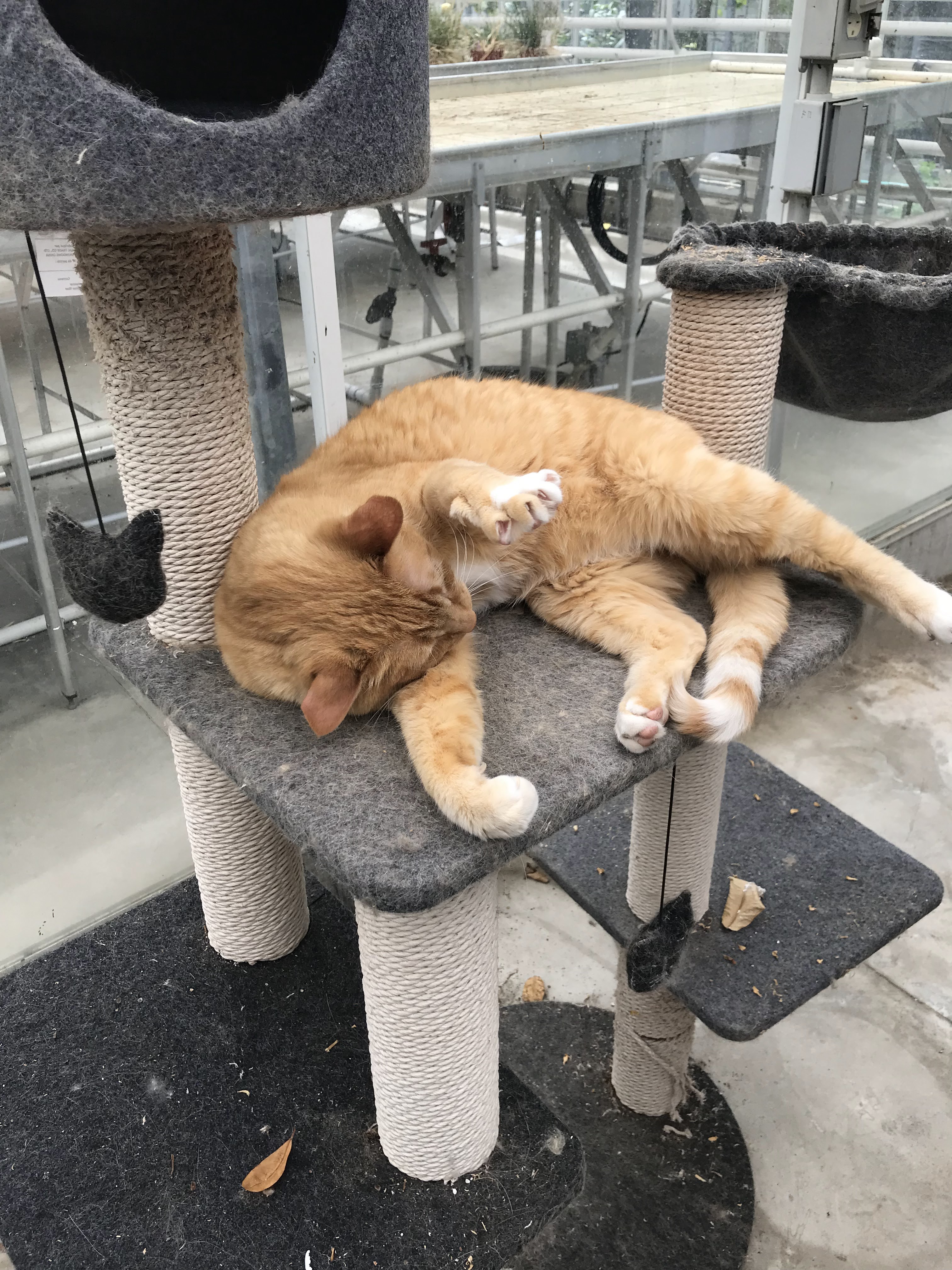
For the first part of our blog post, we wanted to summarize what we did today! We began our day with introductions meeting our fellow CFE teacher candidates and it was so lovely to hear how everyone’s practicum went. We were then given a tour of the garden space by Chris, our ‘Guardian of the Garden’. Next, we discussed the ‘why’ behind teaching in a garden and the potential challenges we might face in doing so. We took a quick lunch break and ventured over to the UBC Greenhouse to grab some tomato plants and met two adorable greenhouse kitties as well. 


We ended our day with a garden work party and got our hands into the soil weeding, prepping garden beds, and planting zucchini. We also struggled to help our tomato friends stand up and get ready to be transplanted since they were very top-heavy and needed some support (although, don’t we all). As Amelia put it, “the stakes had never been higher!” 


We wanted to close off our first post by sharing some of our big takeaways from today as beginning teachers. We recognize the numerous ways in which social-emotional learning (SEL) can be integrated into garden teaching. Today we utilized the calm atmosphere of the garden to reflect on the benefits and challenges of teaching in the garden. We discussed how the teaching in the garden can encourage personal responsibility and environmental stewardship as well as respect for land. It can also be a place of inclusion where the needs of diverse learners may be met more completely than in the classroom alone. Finally, we acknowledged the various ways in which gardens can be used to teach cross-curricularly. For example, we might discuss measurement with students in terms of the square footage of the garden beds. We could explore geometry by investigating naturally-occuring shapes and patterns in the garden. We might also consider art education by utilizing the various colours of plants in the space. All three of those content/subject areas could be integrated into one cross-curricular lesson! 


By reflecting today, we realize that opportunities for learning and teaching in the garden are endless! Over the next few weeks, we hope to expand our garden pedagogies and dive deeper into the world of teaching with the garden as our co-teacher. 


See you all next Monday! 


Sunday, 5 June 2022

Thank you! Thank you!

 Hello everyone in the Secondary CFE in the UBC Orchard Garden in May/ June 2022! I want to thank you all for the wonderful experiences we've had at the Orchard Garden together this month -- and for the really beautiful blog posts you have written. So much thoughtfulness, wit and care in all that you've posted -- I can hear your individual voices coming through too.

And another huge "thank you!" is due to our outgoing Guardian of the Garden, AKA project assistant, Shane Hunt. Shane took on huge responsibilities to rehabilitate the Orchard Garden when he came on last April in the midst of the pandemic, and he has done a splendid job. He has done so much work on the Garden itself and with the people engaging with the garden - and has spent some one mentoring Chris into the role. Shane, we will miss you! Best of luck on your new job with a green roofs company. 


Friday, 3 June 2022

Week 3, Day something (FINAL CFE POST)

Hello folks, it’s the last time you’re going to be hearing from us… we’re at the “last” day of CFE and we spent most of it as our prep day for tomorrow.


Jessie 

I feel excited and I’m so scared that the rain might dump on us tomorrow… I was on my way to pick up the clay in the morning and then the rain was monstrous… especially for June! It really better not be like this tomorrow. I hope the weather will be nice to us and at least wait until we’re done before it comes down!

Throughout the week, I’ve been trying to get in contact with a bunch of several studios to see who would offer any reclaim clay, but the ones that offered for free needed a lot of labour to revive the clay, and I don’t have the facilities to do so! A studio closer to home offered pugged reclaim, so that’s great! It wasn’t free, but it was still “dirt” cheap (get it? Because clay is fancy dirt?! Hahahaha…). I took it home and prepared it for the workshop. I divided the 22 pounds of clay into 1 pound chunks and wedged them, cubed them, and wrapped them back up. They’re ready to roll tomorrow – I can’t wait to see what everyone will create with the material.

Over the week, we’ve had really productive meetings as larger and individual groups. Today seemed to have tied up all the loose ends and all we need now is for tomorrow to come. Working on this workshop together was really fun because as someone who’s all about interdisciplinary and collaborative learning/teaching, it gave me a good sense of what it’ll be like. We were all pulling ideas and concepts from our own teachables and it was really insightful. One of my biggest goals as an art educator is to find a way and collaborate with every subject including science, math, physical education, foods, music, tech education, socials, English, and all of the others. In art education, there’s a really big emphasis on accessing prior knowledge and understanding how the world works around us to create something that’s meaningful. Establishing these connections and actually working with other classes can open the minds of so many because art is often isolated and labelled as the class that’s “easy” and the only goal is to make things look pretty… I could go on about this forever, but art is far from easy; for example, like English or social studies, it’s layered and complex with intentions, choices, and meanings. Art requires a lot of critical and creative problem solving, and is made attractive through knowing how to use and manipulate materials, techniques, and theories. Learning through play is a key aspect of art education and it’s not only us that gets to experience this, but a lot of other subjects as well. For example, over the last few weeks, us lucky few at the Orchard have learned so much through play. But what I’m trying to say is: especially in a student’s mind, interdisciplinary learning is usually overlooked because they are focusing on one subject at a time, all the time. But what if we are able to help them realize that yes, the main focus is in math, or biology, or music, but we can use other knowledge learned from other classes to help us learn. How can we help students to realize that all knowledge is connected to one another somehow, and is able to help make learning more meaningful and essentially easier in the long run? Learning through connections, experiences, and relations has so much potential and power. Over my time at the CFE and especially when organizing this workshop, it’s helped to make my understanding of that clearer. 

See you tomorrow at our workshop!

Cats and dogs over my head on my way to pick up the clay!

🌧️🐱🐶

Dividing up the clay at home.

Thursday, 2 June 2022


Hi everyone. This is Caelan and Lexie here for our third and final blog post of our CFE! We’ve had an amazing time at the Orchard Garden and we want to share a bit about our plans for the upcoming Saturday workshop (if you are interested in joining, you can send an RSVP to susan.gerofsky@ubc.ca) and our reflections from our time in the garden. 


Caelan:

I have always enjoyed spending time in gardens and am an avid gardener in my spare time. When I started this CFE I was excited to find new ways to integrate gardens into my teaching practice. Just as I had hoped, I have been introduced to some awesome activities that I will definitely integrate into future lessons. One activity that I really loved was the eco-poetry workshop that Jo led for us. I will take inspiration from those activities when planning my own land-based poetry lessons. My fellow TCs and I are going to run an activity inspired by Jo’s eco-poetry workshop at the upcoming Saturday workshop. What I am most excited about for this activity is seeing the diverse interpretations that the TCs and participants bring to their eco-poetry!


Today I was reminded of the immense value that working in interdisciplinary groups can provide when our CFE group met up today to discuss how our respective workshops are coming along. We have managed to meaningfully integrate so many subjects into our activities and through this process I have been introduced to many new ideas and perspectives! It has become increasingly clear to me throughout this CFE that the garden is the perfect place for interdisciplinary collaboration and learning. I am excited to continue teaching and learning in many more gardens throughout my teaching career!


Lexie: 

Like Caelan, I also enjoy gardening and over the course of the CFE have been inspired to get on top of my yard and garden at home. I have been pulling out invasives that have just been left for years and am in the process of installing a native pollinator meadow. Speaking about bees with Magali had me consider what I can do to help multiple species of bees in my neighborhood. For a long time, I have been a fan of outdoor and place-based education and this CFE has given me so much inspiration and content I simply cannot wait to implement these lessons in a classroom. The Nitobe Memorial Garden was one of my high points of the CFE as I was so moved by the idea of a garden as a method of storytelling. 


I have a tendency to want my own space and I have a habit of trying to work independently even if it isn’t the wisest choice but throughout our work parties and through working on Saturday's workshops with a range of people from different educational backgrounds gave me a renewed positive outlook on collaboration. The most important lesson this experience has given me is that I don’t have to work alone. This is an imminently valuable lesson for my upcoming career as a teacher. 


Today’s planning session went very smoothly as we ironed out most of the final details for the workshops. We focused on contingencies and the nitty-gritty to avoid any possible hiccups the day of. We are all very much looking forward to meeting the attendees and showing them the product we have put together. 


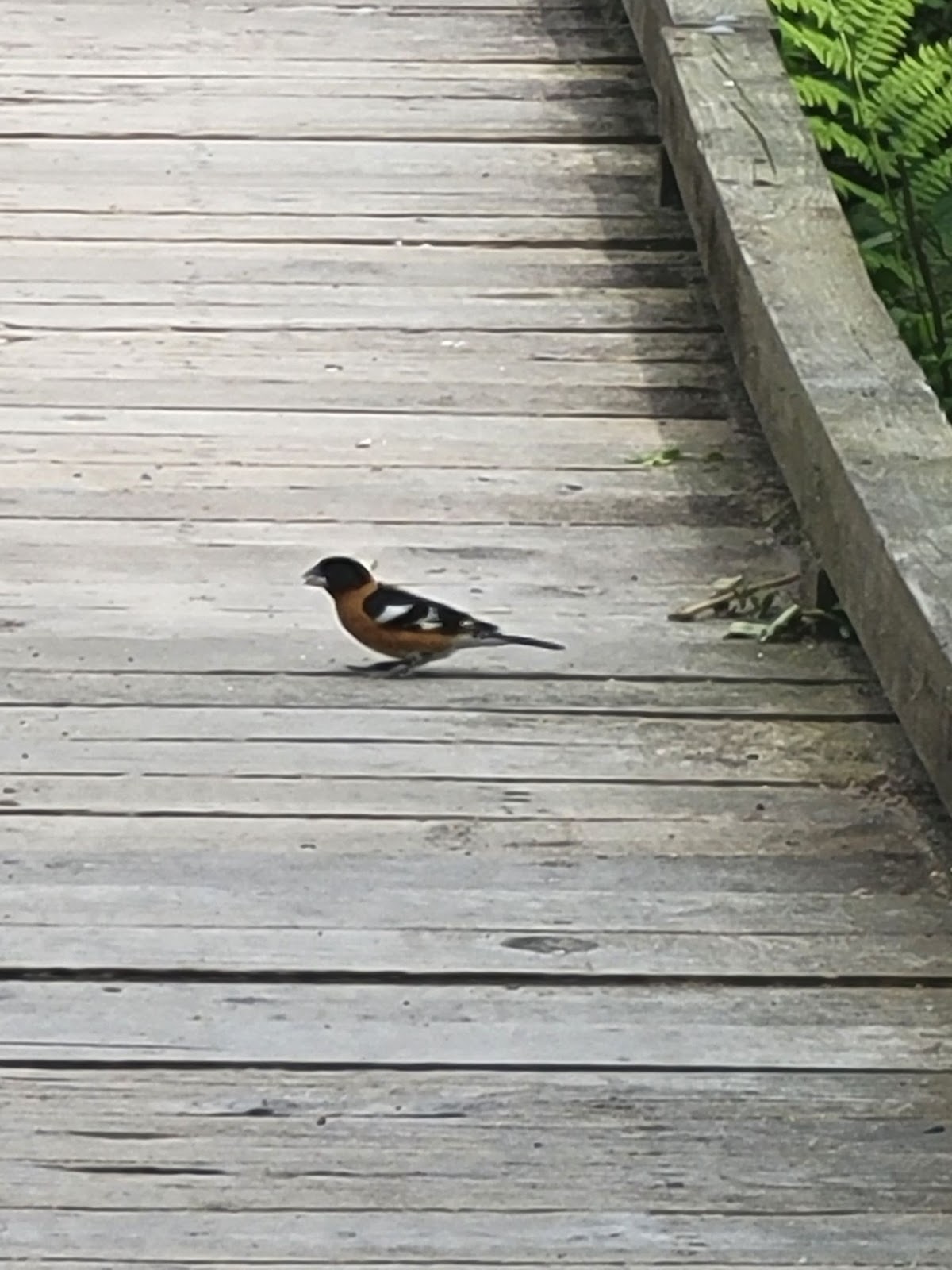
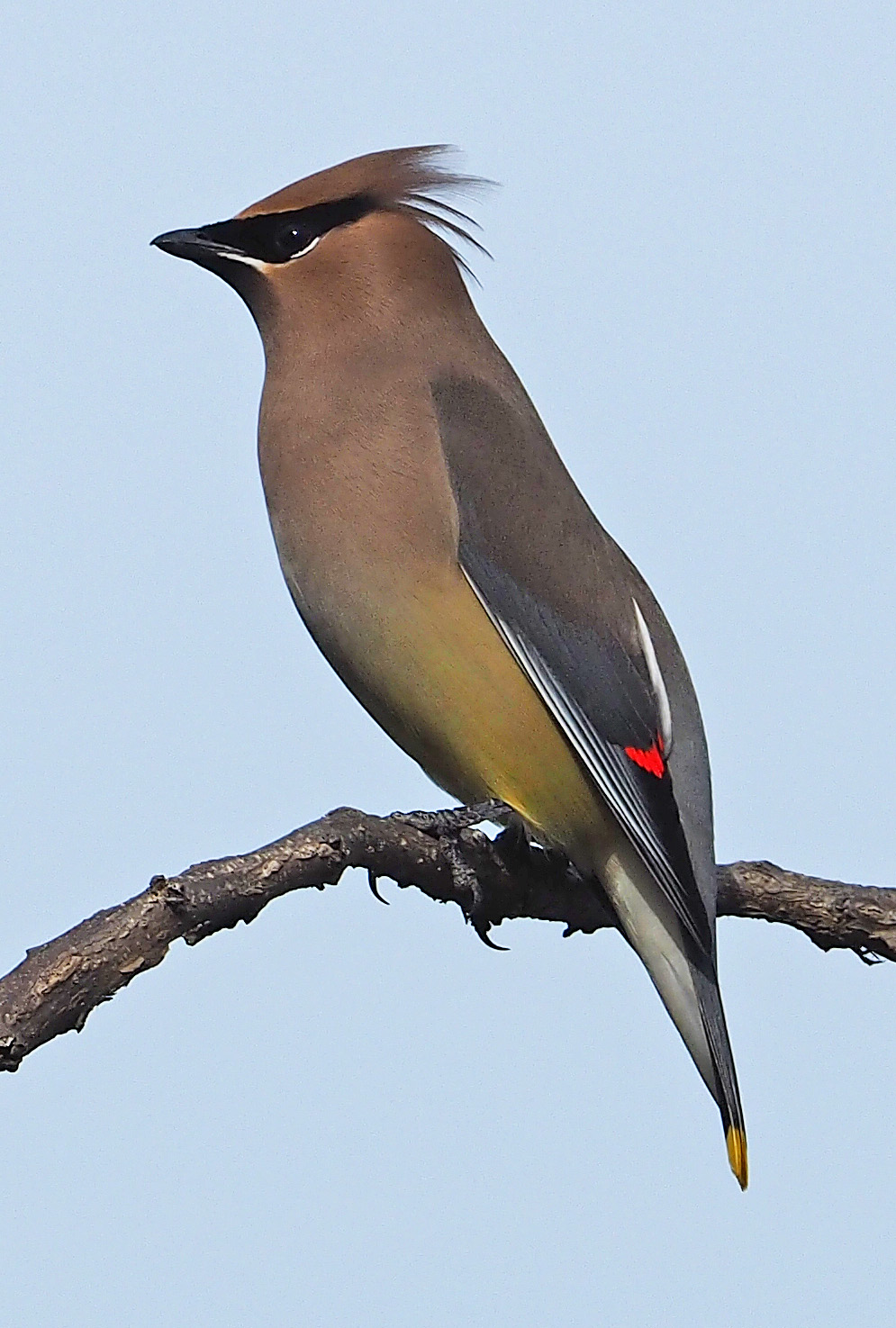
For those who don’t know I am a bit of an avid birdwatcher and after our meeting today I went to Burnaby Lake to look at some birds. Piper Spit (at Burnaby lake) is a fantastic place to go birdwatching year-round. There was a family of Sandhill Cranes, which are massive and beautiful birds, with many other birdwatchers taking pictures from a respectable distance. There were more Cedar Waxwings than I had ever seen in one place as well. I believe birdwatching provides great educational pedagogy because of its collaborative nature of it. There is a lot of quiet solitude involved, but there is also a great sense of like-minded community. For example today everyone could hear that there were black-headed grosbeak’s around but 5 of us that were looking weren’t having any luck. Eventually, after I had been looking in the woods for several minutes trying to navigate one I took a step back to see one had perched right above me. Sometimes you really do just need to step back to find the answer. I had become separated from the other bird-seekers and a few minutes after I had walked away from my find, a couple I had talked to turned the corner and I pointed it out to them. Then, I ran into another couple and walked them over to where it was. Suddenly there were 3 of them in the trees around us singing their beautiful song. Perhaps I am sensationalizing but it felt like a reward for the community working together and respectfully engaging with our feathered friends. 


Anyways I knew I wanted to get some journaling done about the romantic nature of birdwatching so I am glad I got it in. Below I will post pictures of the birds for reference. 


Black-headed grosbeak photo by me taken at Campbell Valley Park, not Burnaby lake. I didn’t get any pictures today. Apologies I am not a professional bird photographer. 

Family of Sandhill Cranes. Picture by me taken at Piper Spit, Burnaby lake. The baby had such long legs!

Cedar Waxwing, Photo by Judy Gallagher. I think they got their name because it looked like they have been dipped in wax. 


And lastly, a nice fluffy goose butt. Enjoy!


Wednesday, 1 June 2022

Week 3 - Day 3

 Vivienne:

During our final week of our time in the orchard garden, we have spent our days talking and planning our upcoming workshop. In preparation for this, the group of us had been throwing ideas back and forth at one another and getting glimpses into our own individual approaches to teaching and learning as a result. Group projects are tricky as is and typically undergo a sort of metamorphosis from highschool to university. In highschool, I found my peers and I relished a group project. There was so much comfort to be found in not having to work alone, but instead work collaboratively with one another to create together. However, once I entered university, I found my learning became steadily more and more isolated. Sure, I exchanged ideas with my friends and asked them to glance over my paper when I felt it wasn’t the strongest, but generally, it was me, myself, and my rattling mind. In entering this type of academic isolation, I found myself becoming defensive of my ideas, as if sharing them somehow put me at a disadvantage. As if having something had to always be mine, instead of made better by the input of those around me. 


My knee jerk reaction to a group project is still stress. How will it be organized? Who will do what? What happens if we disagree? What happens if someone doesn’t show up? What happens? However, these past couple weeks with my gardening fellows have challenged my apprehensiveness. In fact, the central idea that I’ve taken from my experience in the B.Ed so far is that learning and teaching doesn’t happen in isolation, nor in the space of defending your ideas like a squirrel hoarding some sort of intellectual acorn. Instead, it happens in the exchange, in the intentional choice of collaboration, of community making, of vulnerability. It’s okay to not know what will happen or who will do what. What’s more important is to begin the sharing and begin the asking. I am made a better teacher by the people around me. This has been true of the wonderful group of women I’ve become close friends with from my cohort who I leaned on during my practicum and this is now true of the folks I have met and grown closer with during our days in the garden. Chris said something about complex root systems and I wish I could remember it exactly but even without the particulars, learning and growing and teaching are all their own systems with their own complexities, and it’s a disservice to imagine that one can do this alone without intertwining and being made stronger with the systems around you (Chris - my sincere apologies if this silly metaphor is absolutely incorrect on a botanical level).

Leo:

Planning this workshop has been an interesting case study in amalgamating multiple unique teaching styles and special interests - poetry, linguistics, planting, harvesting, cooking, sculpture, the act of planning itself - to create a cohesive set of activities. Looking forward to Saturday! Let’s hope the weather’s kind to us.


So - we’re reaching the end of the CFE. A grand time it’s been, weeding, planting, harvesting, up-potting, seeding, writing, singing, watering, irrigating, reading, listening, soundscaping, coding. It’s a good time to reflect on what we’ve learned thus far - about gardens and gardening, our (read: humanity’s, society’s) relationship to the great outdoors, and how school gardens can transform learning. 


What is a garden? Soil and some plants? A front yard? What surrounds the pathways of a public park? The blackberry bushes growing haywire through and over a fence on a road’s edge? That patch of dandelions spreading their roots beneath the leaf-covered grass? The Vancouver School Board would have us believe that what defines a garden is its aesthetic value - whatever we can squeeze out of the outdoors to beautify our schools. The VSB regiments their gardens - measurements and restrictions aplenty until what’s left is a checklist and the constant threat of deinstallation should any part of a garden ever fail to tick a box. Is it worth it? Mayhaps. 


Are gardens aesthetic projects? Are they more? What of the tradition of the Japanese dry garden, made with gravel and rocks and meant only as facsimiles of nature, not as appropriations? Must a garden be productive, give us food? Does a garden fail - or worse, lose its “garden” status - should its crops fail? A school garden is a wonderful idea but there is much to consider - semantically, ontologically, ethically - in the act of cultivating an outdoor space within a human one. Perhaps being hampered by such minute bureaucratic constraints defeats the very purpose of creating an outdoor educational space - that of breaking free of the walled, textbooked traditions of our public education system and transforming learning into a process of listening, breathing, moving, and cultivating. 


Perhaps a garden can be as metaphorical as it is literal. This would mean that a garden can be anything and anywhere. An outdoor classroom is what we make of it - guerrilla warfare against pedagogical orthodoxy - bureaucracy be damned. So tender your garden! Whatever, and wherever, that garden may be…