Wednesday, 18 May 2022


 I'm glad you enjoyed, and wish you all well for the rest of this experience!

Here are my preparatory notes for yesterday's eco-poetry workshop. 

Enjoy!

Jo


Eco-poetry workshop in the Orchard Garden

May 17, 2022 


The aim of this workshop is to: 

explore what we understand by eco-poetry 

experiment with an array of eco-poetic activities, and consider how we may draw from these in our teaching

consider the role of a gardener and beings in and around the garden.


Eco-poetry?

Let’s begin with what we already know about eco-poetry; and how this may connect with various subject areas ...


Eco-poetry: 

has a strong ecological focus and is about the desire for creating change

is nature poetry that imagines changing the ways people think, feel about, and live and respond to the planet

supports a poetic, cultural, and spiritual orientation to life

explores interconnectedness between humans and non-humans and gives voice to more-than-human worlds

considers the possibilities of renewing our commitment to places such as The Orchard Garden through a multiple literacies lens. 


Activity 1: Encountering beings in the garden 


Aims: explore how being outdoors can enhance writing and make writing poetry enjoyable; consider beings living in the garden.


Wander around the garden and stop by a being who calls to you! This could be a tree, a plant, a bee … What do you think I mean by call to you? Draws your attention, catches your eye … 

Connect with this plant for about five minutes, sitting or standing or moving nearby; no writing just observing, maybe closing your eyes, smelling, letting its leaves brush your skin …


Write words to describe your experiences of being with this tree or plant, e.g., create a word-bank / bevy, gathering, collection, group … to describe what you see, smell, sounds, colours, shapes, textures, movement, gestures, feelings …


Each person shares their words, gestures, acts movement …


With this knowledge of another being, we’re going to create a praise poem or an ode inspired by mentions of Odes in yesterday’s workshop. Experiences of teaching odes before? 


An ode comes in many forms – short, long, rhyming, nonrhyming, but a key characteristic is odes celebrate a being, tree, plant, person, place ... 


Odes often begin with “O Picnic Table …!” and consist of 4-lines, flamboyant, meditative, something else. 


3-5 minutes to write an ode. 


Share.


Discuss possible ways to adapt this activity for different subject areas & ages …?

Various poetic forms, e.g., haiku with 5-7-5 syllable pattern, Fibonacci sequence poems, Bridges Math and Art …


Activity 2 – Encountering voices in the garden


Aims: Eco-poetry helps us to take a fresh look at life; consider the garden from different perspectives and multiple literacies. 


Writing in ways that do not place human interests at the centre helps to shift attitudes and make room for wonder. Rich in many languages, only a few of which are human, eco-poetry gives voice to the languages of trees, plants, oceans, clouds …


These beings speak to us and may even gift inspiring messages as to how we might move forward. 


In pairs, create a call and response poem between a being, e.g., a bee, tree, plant and a gardener. Person 1 imagines being a tree, plant, bird, bumble bee, shed …; and person 2 a gardener.

Person 1 calls, and person 2 responds. 

A call? Could be a question, a surprise, a random happening, advice, a complaint …

A response? Could be an answer, another question or happening … 


Write three verses, with between 2 & 6 lines in each.


Consider layers in the garden – beneath the soil, mostly unseen roots; the ground; air and skies above …


Show image of different spheres, and where gardener is in relation.


Activity 3 – Bringing wonder to the wider area


Aims: Explore how the Orchard Garden brings wonder to the wider area through the voices of at least three beings.


So often I consider the garden as an oasis surrounded by an encroaching campus and want to give voice to more complex relations with the help of beings who live and travel among the garden and surrounding areas. 


For example, a poetic conversation between comfrey bell flowers, bees travelling across campus, and the Scarfe Building … 


Let’s go for a walk near to the garden and encounter beings living there. Consider living connections with the garden … 


Consider ways in which eco-poetry makes environmentalism happen, influence of stories about a place, patience, humour … 


Eco-poetry provides both a healthy way to respond to issues we care about, as well as thinking creatively about words and the worlds we create.


In groups of 3 or 4 write a poem or a poetic conversation in response to our walking experience, and share!


Day 2 of our CFE!

Hi there––this is Magali Chemali and Lauren Peat writing, two secondary teacher candidates at UBC. Like Amy and Gio, we are also completing our Community Field Experience (CFE) at the Orchard Garden. Magali is both a Science and French teacher, and Lauren teaches English, French, and Humanities. 

First, Magali will explain some of the day’s activities; Lauren will then discuss some ideas that occurred over our lunch break!

*

Magali: Today, we got to do ECOPOETRY! If like us you find yourself wondering what kind of French cheese this is, ecopoetry is a little bit like nature poetry, but with a touch of “calling for a change.” And the fun part is that we got to learn and practice this poetry sitting in the morning sun, in the garden, with Jo as a teacher. :) Jo talks to plants (she even spoke to us about a tree alphabet!). She touches them to determine how they feel, and meditates (with a smile) while looking at them. Today we tried Jo’s method and it felt GREAT! First, we had to pick something in the garden we felt close to. Everyone picked a plant or an animal, because, you know, we’re in a garden. But Gio picked the wooden picnic table, because it’s Gio and he knows how to turn anything into a poem. We spent five minutes next to our plant/animal/object, trying to connect. We were then supposed to create a “word bank,” describing it. It did feel to me like this was a one-way relationship… but I ended up with twenty words written down on a piece of paper. The words could be anything, just what was crossing our mind after these intense five minutes with our new friend. Then, the magic of poetry entered the orchard! We wrote an ode to this new friend, an ode that included some of the words we picked. The result was BEAUTIFUL! What a creative bunch of new teachers we have here!

Afterwards, we paired up and played a poetic game… One of us was the gardener, the other a plant in the garden. We imagined how the plant could call out the gardener… This was a really fun creative writing game! Together, we created wonderful poems, which reminded us how powerful collaborative work can be, and that we need to develop more regular opportunities for our students to do this, too.

*

Lauren: The ecopoetry workshop was very fruitful (pun intended!), and inspired some great discussion. Over our lunch break, Magali and Gio (both science teachers) raised the difficulty of teaching science from a non-anthropomorphic perspective; that is, a perspective that doesn’t interpret everything through the lens of humankind’s needs and desires. (By way of example, Magali mentioned a former student of hers who was convinced that bee populations were important insofar as they pollinated our food.) It occurred to me, listening to Magali and Gio, that the literary community is wrestling with much the same problem as the scientific community: the near-impossibility of articulating phenomena in a way that does not presume, take liberties, and miss the mark. It is true, as Jo said, that flora and fauna call out to us in myriad ways: for water, for sunlight, for replanting, for care. And yet there is an irresolvable wildness to these animate objects, one cannot be remediated by language, or even attention. As our lunch break came to a close, I think we were left with more questions than answers; although it seems to me to speak to the power of praise and celebration––of revering that which we do not understand.

*

We were (happily) too busy writing to take any photos of our ecopoetry workshop, but here are some photos of our post-lunch work party in the garden!


Caelan and Gio proudly displaying their beautiful, home-made trellis! We will soon be training the grape vine around it.


The exquisite Paulownia tomentosa, or "Princess tree." Susan told us that a musician friend of hers sometimes makes handcrafted musical instruments from the wood, because of how quickly the species grows.


Lauren getting her hands dirty in the garden! Boy does it feel good to return to nature after weeks of grading papers...


Monday, 16 May 2022

Day 1 of our UBC Orchard Garden CFE!

            What a beautiful and sunny first day at the UBC Orchard Garden! With the recent weather they’re calling “Mayvember” (the coldest May in 100 years!) I certainly had my doubts, but I actually may have I got my base-tan. Or maybe just a neck burn – I’ll start bringing sunscreen tomorrow (oops). Such a lovely start, and a beautiful way to officially close the doors on our practicums. While it was great to see some familiar faces again, I know we all miss those sweet kiddos we made connections with over the last 10 weeks, and honestly I can’t imagine a better transition back than a sunny day in the garden. My name is Amy, and today I will be joined by Gio as my blog partner.

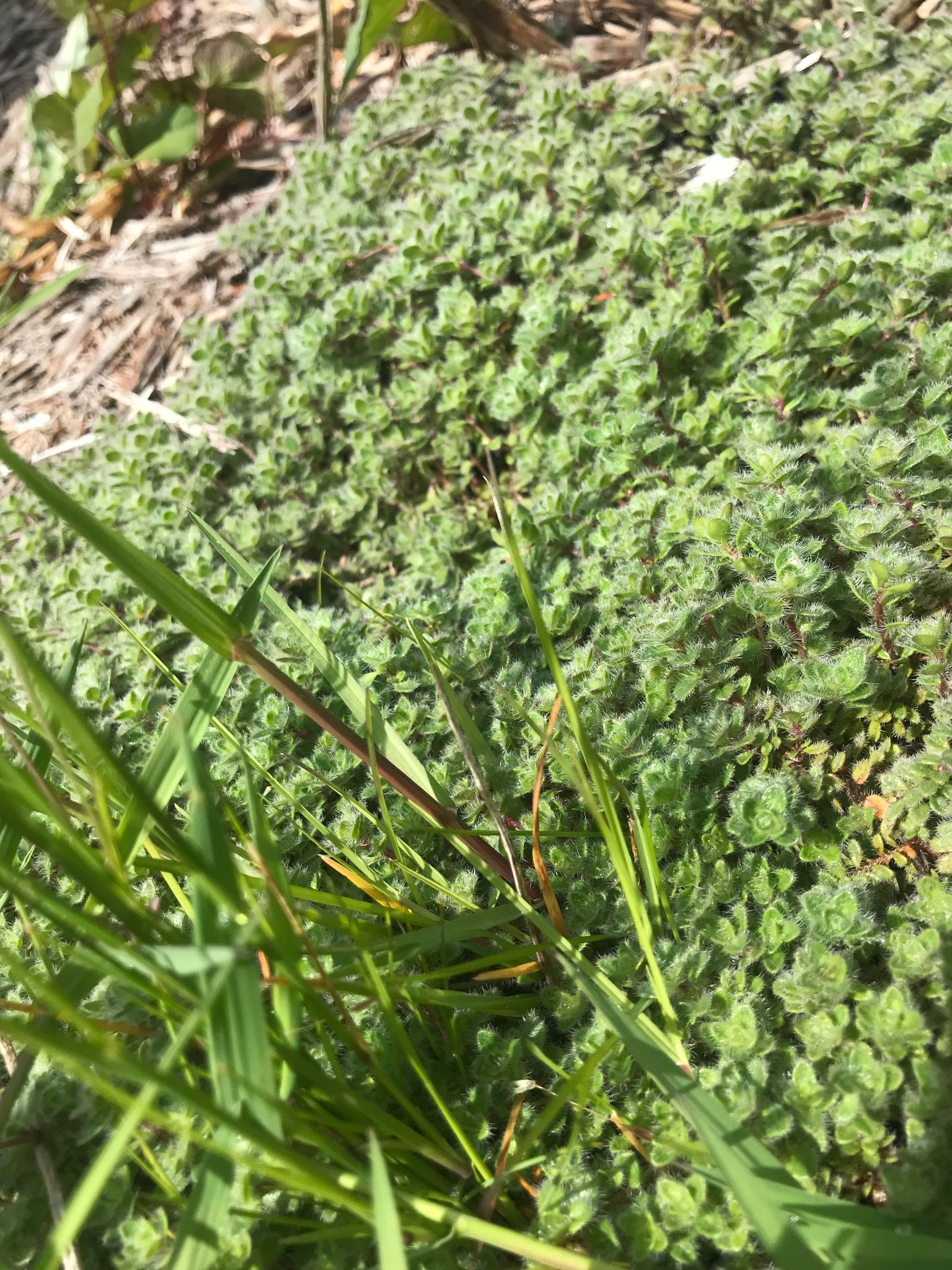
            The afternoon was spent working in the garden where we, the teacher candidates, were responsible for weeding, cutting back old growth, and other gardening tasks. Only a few of us had actual gardening experience, which makes for a great and diverse group of learners! We split into two groups: one group began weeding, and the other made little “fences” around garden areas using bamboo sticks and twine. While many of us had been raised thinking we have to weed every single weed out of gardens, one remarkable thing about the UBC Orchard Gardens is that they believe in the conservation of the “unplanned”. This means that we only removed weeds that were directly in the space of the plants purposefully planted, while allowing those outside that area to thrive all they want. Personally, I have next to zero expertise in gardening, and have only ever been instructed to remove like mad at the sight of any weed. This new concept, however, felt right. I’ll definitely be adopting this mentality some day, if I ever have my own garden. Oh! Another thing I’ll adopt is the idea of using creeping thyme as a lawn! Grass requires a lot more water, and people often use chemical fertiliser to keep it green. Creeping thyme, however, is soft, lush, and even edible. Plus, you don’t need to mow it! I wish every lawn looked like this. Check it out:
(Photo: close up of creeping thyme)

            Before we go on to reflect on our first-day experience, I have to share the best part of my day: we actually saw a coyote!! It came by so quietly to check us out that we didn’t notice it until one of our teammates saw it and clapped at it. Even though it was so adorable, it’s really important to keep the wildlife wild and not get them too accustomed to human interaction.

(Photo: our coyote friend running away. She got SO close to us! This was the fastest Gio could get his phone out)

Monday, 6 December 2021

The UBC Orchard Garden is a finalist in the Jane Goodall Institute global Roots and Shoots award


What a great honour, from such an iconic and important environmental educator and activist! The UBC Orchard Garden was nominated and judged a finalist for this global award from the Jane Goodall Institute. We have been very grateful to the JGI for a series of Roots and Shoots grants that have supported our new food forest project and educational engagements with teacher candidates around sustainable food and garden-based education. Here’s a link to the UBC Faculty of Education article on this.

Sunday, 14 November 2021

The Traditional Chinese Medicine Garden

The small-scale and organic cultivation of Traditional Chinese Medicine (TCM) herbs is a new project started this year at the UBC Orchard Garden. Two garden beds of TCM herbs were planted in early July by a small group of volunteers from the UBC Orchard Garden Community. The plants are currently growing beneath the canopy of a plum tree in the Food Forest.

What is Traditional Chinese Medicine, and Why Grow Medicinal Plants?
 
Traditional Chinese Medicine is a holistic system of medical theory, wellness practices, and healing modalities originating from China, and is estimated to be over 3000 years old (Schafer, 2011). Like other ancient traditional medicines, such as Ayurveda, TCM has an extensive herbal focus. This can be seen in the highly influential Ming Dynasty text Bencao gangmu, or Compendium of Materia Medica, written by Li Shizhen contains descriptions of 1094 herbs, 444 animal parts, and 275 mineral substances (Britannica, 1998). Both the theory and practice of TCM draw heavily from the naturalistic Daoist philosophy, which emphasizes holism, interrelationship, harmony, and balance, and situates health and illness within the unbroken context of the individual’s physical, psychological, and emotional well-being (Kaptchuck, 1983). Treatment within TCM is therefore individualistic, holistic, and emphasizes relationality between doctor and patient, and between patient and their life-world. For example, TCM herbal formulas are commonly individually tailored to the specific condition of each patient. 
 
Over the last ten years, acupuncture and TCM herbalism have become increasingly popular in Vancouver, with people looking for alternative holistic treatment outside Western medicine. TCM clinics can now easily be found on every major street in Vancouver. However, most of the TCM herbs used by TCM practitioners in North America, and sold in local pharmacies, are still sourced from Asia. Longtime Chinese medicinal herb-grower Peg Schafer points out three concerns for continuing reliance on current sourcing practices for Asian medicinal herbs: unsustainable collecting practices because the majority of herbs in China are still harvested from the wild, concerns over quality, and the rising costs of herbs (Schafer, 2011). Over the last 20 years, these reasons have led her, and other growers around the United States such as Joe Hollis and Jean Giblette, to start cultivating Chinese medicinal plants locally in order to ensure greater accessibility and high quality. 
 
The TCM garden, much like the UBC Orchard Garden, is intended as a demonstration and learning garden. Emphasis is placed on promoting both the cultural and medicinal aspects of Traditional Chinese Medicine, as well as local cultivation of TCM herbs. If you are interested in visiting the TCM garden, or learning more about Traditional Chinese Medicinal herbalism, growing medicinal herbs and other related activities, please sign-up for our newsletter to keep informed about volunteer opportunities and upcoming workshops.


Saturday, 2 October 2021

 
The UBC Orchard Garden – Summer Work Party: Implementing Phase 2 of our Food Forest
 
During a work-party in early June, the UBC Orchard Garden community implemented the second phase of our food forest by adding dozens of fruiting shrubs (blueberries, honeyberries, gooseberries, and currants) that will grow beneath our fruit and nut trees.

What is a food forest?

In technical terms, a food forest is 'a perennial polyculture of multi-purpose plants’ (Jacke and Toesnmeier, 2005). Generally, the plants that are used are perennial, meaning that they come back every year (e.g. trees). A monoculture is a plot of land that is planted with a single species typically grown in rows that are evenly spaced throughout a field, whereas a polyculture is planted with several difference species generally using more naturalistic planting patterns. Finally, although one of the goals of creating a food forest is often the production of food (e.g. apples, pears, hazelnuts, etc.), they are multi-purpose and can also be used to produce fuel, fiber, fodder, fertilizer (f)pharmaceuticals, and fun (Jacke and Toesnmeier, 2005).

In addition to the physical materials that food forests can provide, they also have ecological value! Supporting biodiversity can be a primary goal, or indirect benefit of gardening ‘like the forest’ (Jacke and Toesnmeier, 2005). This is because a food forest, similar to a natural forest, is composed of a variety of vertical ‘layers’ (e.g. the tree canopy, the shrub layer, a herbaceous ground cover, etc.) each of which provides a variety of ‘niches’ (i.e. a particular set of environmental conditions) that can be occupied by organisms (e.g. bees, birds, butterflies). Most organisms are best adapted to a particular range of environmental conditions, and because forest gardens can offer a broad range of micro-climates and a diversity of plants, insects and wildlife can find refuge in them. Furthermore, because we grow edible plants in multiple vertical layers, the potential for ‘additive yielding’ occurs (Jacke and Toesnmeier, 2005). Additive yielding is the cumulation of food produced by say, a thyme groundcover that grows beneath a blueberry bush which grows beneath a cherry tree.


If you are interested in visiting our food forest, or learning more about food forests, ecological gardening and other related activities, sign-up for our newsletter to keep informed about volunteer opportunities and upcoming workshops.

Hope to see you soon!

Shane

Jacke, Dave., Toensmeier, Eric. 2005. Edible Forest Gardens: Ecological Vision and Theory for Temperate Climate Permaculture