Sunday, 18 June 2017

Day 10- Eco-poetry

Today we met Margaret in the garden to explore the concept of eco-poetry in the outdoors. After a brief introduction to the topic, Margaret led us to different sports in the garden to inspire our writing.

Using Descriptive Words to Describe a Tree
The first stop was the Birch tree forest, and we were encouraged to use our senses to brainstorm adjectives about the trees based on Smell, Feel, Sound, and Sight.  We all thought this was a great exercise to practice coming up with adjectives for something tangible. Some textural words we used were:hard, solid, rough, flakey. We also tried to characterize the trees with short phrases, showing what our own connections to the trees were.

What words could you use to describe this tree?
For when the majority of us finished, Margaret would play her flute in the distance to signal that it would be time to transition into our next activity.  We all really loved this idea as a call for students to gather as it was so much more relaxing than a bell or clap as well, it provided time to finish work and have a peaceful end of each creative process.

Alliteration
In the next station, we wrote short verses with alliteration in them, using the grass as inspiration. It was nice to spread out and sit quietly in the sun with our thoughts to ourselves. We noted that grass is something that is very common in the city, but we rarely seem to take time to notice its characteristics and details. Taking the time to sit and focus on such a small, menial plant, put into perspective how we should slow down to appreciate the intricacies of nature. Using alliteration, you can notice that the rhythm and flow of the words themselves mimicked the sound in nature, there is rarely a sound that only happens once when we listen.

Beautiful Buttercups Basking in the Bright Sun
Haiku
Next, our exported adventure took us back into the Birch forest, where we used the trees, leaves, sun, branches, twigs and ground around us as inspiration to write haikus. As Elementary School Teachers we were quite familiar with haikus and as a result many of us wrote more than one.

We found that it was interesting to see how a Japanese poetic form has been translated and used so frequently in schools. As we have seen in last week's visit to Nitobe Memorial Garden,  there is an apparent respect for nature, its state of being and the balance that comes forth from simply observing and noticing natures subtleties.

Story Response
Margaret lead us to the grassy field and shared with us two stories of Eagles. We were told to respond through drawings. We found it fascinating how a verbal story could provoke so many different images. Many of us just spread out and just stared and each movement in the trees, sky, and the ground. We were immersed in the process of creating rather than focusing on the product that was to be created which brought a sense of peace which made everything much more natural.

Free Verse
As we followed the " Path to Verse" going through each station, we were invited to create a free verse poem using the different words, alliterations, and phrases that we had previous created. Given that there were no rules, it was nice to be able to play with words, moments, and moods. We could see how this was a closing piece to the journey that we had taken today, many of us adopted the practice of spreading out into our own spaces in the garden to complete this activity. As a cultural connection, teachers could look at other works of poetry based on nature to form connections based on content or style.

Closing
At the end of our eco-poetry session. We debriefed an shared some of our poems with each other and also what we liked about the activity. We all agreed that it was really helpful to have a general focus on what to write on and to be in the space helped us create our poems. We also all liked the level of loose structure that the activity had, in that we knew what the boundaries were, what sound to listen for when to come back, and a general idea of what should inspire our writing. However, the activity was not overly structured as we were allowed to wander and find our own independent peace to write in. This would definitely be a fun way to incorporate outdoor learning into a poetry unit and to build on the core competencies.

We briefly talked about how to organize and create a safe space for learning opportunities like these to occur. Keeping in mind: boundaries, accountability, safety hazards, permissions, and preparations. In light of this conversation, we saw that it required a process to set these experiences up, but when established, they would be easy to maintain.

- Kirstie and Natalie

Orchard Garden Saturday workshop #7: Flax to linen

On Saturday June 10, we were thrilled to have guest artist Rebecca Graham of EartHand Gleaners teach a hands-on workshop on flax processing and linen thread spinning with drop spindles.

Rebecca used flax we had grown in the Orchard Garden last summer and flax from EartHand gardens, brought to campus in the new willow Weaving Wagon and towed behind an electric bike! Participants learned how to ripple, ret, break, scutch, hackle


and spin fibres from home-grown flax plants to make a fine linen thread -- the original 'line'.

John Ames, Julian Yeo and Ele Hendriks organized and ran the workshop, and a great group of teacher candidates participated. Photos below!


Uhill Elementary


Today we starting off by meeting at University Hill Elementary to join in Kate's Foreman's "Outdoor Learning" class. We were welcomed into the Uhill classroom with open arms. When we first arrived we were like a fly on the wall, observing the instructional time and classroom management from Kate.

Kate started off her class by asking the children to reflect on their previous knowledge and to make connections to previous learning from their other classes. The classes focused on learning about slugs, a subject that many students already had a strong background knowledge on. Kate supported the gaps in student learning by oral, visual and written information on the Smartboard in front of the class. The necessary information on slugs and expected behaviour was given to the students in the classroom, before we went outside.

As future educators, we found this time especially interesting. It has showed us that time in the classroom does not have to be isolated from outdoor learning, and instead it can be used as a way to support outdoor learning. For example, the children learnt the features of slugs before going out into nature to find the slugs themselves and identify the features. Had they not had the instructional time in class before hand then the outdoors experience would have been less learning focused. Furthermore, the students are encouraged to let the teacher know with a non-verbal cue when they have made a connection in their mind (by linking their two thumbs and index fingers together). This encourages the students to reflect individually on their learning and independent knowledge.

Once we were outside in Pacific Spirit Park, the goals and expectations for behaviour were clear. The class would be based in their "secret spot" and would be allowed to wander around the park so long as they were within ear shot to hear the "coyote" call from Kate. The children were encouraged to explore, inquire and play until they found slugs. Once a slug was found, the teachers would put a hula hoop around it to keep the boundaries clear. The children loved this time outside!

This teaching method has helped us as teacher candidates to see outdoor learning in action. We learnt the value of setting boundaries and rules to support the learning, to encourage creativity and curiosity, and how to ensure that all students are involved and interested. It was a wonderful experience. There has been tons of learning by the children and us, and we are grateful for the opportunity to attend Uhill!

-Meg and Laurence

Saturday, 17 June 2017

Day 8 - Visit to Musqueam

Today we had the amazing opportunity to visit Musqueam and learn about their culture, history and traditions. 

Musqueam Cultural Centre

Fortunately, a Grade 8 class was doing an educational tour the same time as our group was supposed to do the self-guided tour and their leader, Audrey Siegl, warmly invited us to join them. It was a good omen as to how the rest of the day would go; Audrey was open, honest, brave, and welcoming to us all. She shared her deep knowledge and personal experiences to tell us the story of the Musqueam people.

As an Indigenous student Sara Louie, from Musqueam First Nations in the Teacher Education Program at UBC; the importance of place-based learning is integral to the First People Principles of Learning and Indigenous pedagogy. I have lived in Musqueam my whole life. A visit to my community through an educators perspective awakens my sense of being and future goals within education.
The various opportunities and resources that teachers can make with connections to the curriculum are open to ones creativity in their own pedagogical approach to teaching. Learning about the land and what it means to my community really grounds my connections to my identity. 

Walking through the Cultural centre The City before the City Exhibit and as well as specific points of interest to the community provided excellent learning opportunities to bring back to the classroom.


 I was able to explore all kinds of ways to connect subject/content: i.e History, Social Studies and Art with story-telling and place, Math and weaving with cedar and wool, Science with natural medicines and native plant species, and Language Arts with the Language. I realize that one would need to understand or learn about each of these teaching points first to be able to make connections in the classroom. The tour is an excellent way to begin to learn and it's also a way to gather knowledge of how to teach the local First Nations within the curriculum. 

By the Fraser River in Musqueam

Tuesday, 13 June 2017

CFE - Day 7 Musical Storytelling

This morning, we had a great time with John doing a musical storytelling activity.  We incorporated garden-based learning with different art forms, such as language arts, visual arts  and music. Our task was to create a musical story inspired by something that made us “happy” during our CFE at the Orchard Garden. John wanted us to specifically reflect on the concept of play education, and to recognize the difference between playful/ hands-on and instructional learning. The idea of providing supervised exploration for students in the garden and the classroom is important because students then facilitate their own learning. By doing so, they dig deeper into the material and explore their own wonder. As a result, their learning experience is much more enjoyable.

As a big group we began to brainstorm ideas of what made us “happy” during CFE, keeping in mind that every living thing on Earth has an ideal environment where their events/actions intersect with other life forms. John pointed out that as social creatures, we love stories. Our world/environment is filled with them and can be found in forms such as books, plays and movies. However, stories can be too long and can result in readers losing interest. He explained that children are better capable of remembering events and details that occur in a shorter time frame.  Therefore, by using a 24 hour timeline (e.g. 6am to 6pm), students will be more likely to better focus their ideas and gain more out of an activity. We were then inspired to create a fun and playful one-day timeframe story about a cilantro plant we transplanted in the garden, after accidentally being dug out of a plant bed full of garlic. We ‘rescued it’ by planting it in a location which would provide more sunlight and space for it to grow. We even named our little Cilantro friend Cedric.  Also, in order to bring our story to life, we used various instruments to create a soundscape to highlighting the plot of our story. 


Completing this activity will provide students with the opportunity to be playful by exploring their surroundings through imagination. Students will also identify the elements/structure of a story,  and have the freedom to be creative in the brainstorming process by utilizing different art forms to express their ideas.  Furthermore, this activity could be easily modified for various grade-levels, regardless to whether students are in kindergarten, or in grade 7. For example, for younger students, rather than having them all work on the same aspect of the story, the class can first brainstorm the different parts of the story before being divided into small groups to tackle different aspects of the timeline.

Below is a video of our musical story - "The Flavour of Love - A Modern Day Garden Love Story".


Without a doubt, this is a unique learning opportunity and experience in which teachers can easily incorporate into their future lessons.


Monday, 12 June 2017

CFE - Day 6

We kicked off the morning by thinking about how we might create our own school gardens. I found myself dreaming big; imagining my students and I coming together to tend to and eat from our big and bountiful garden. However, I was gently reminded that this vision takes a lot of work, money, and involvement from many different people to make this a reality. Perhaps I was getting ahead of myself…

Thankfully, Liz Beattie offered us some solid advice on how to make a school garden a reality. You want enthusiasm for your school garden to endure and spread, not fizzle out. So to begin, she suggested that we start small. Plant a seed. Grow something on the windowsill of your classroom. Try a small container gardening program like “Spuds in Tubs” or start with small, moveable containers. Going hand in hand with this advice is: keep the cost down! Free is good. Look for funding, grants, programs, and any community partnerships that can be made that will allow you to access soil, containers, compost, seeds, etc.

Other considerations were how to create and involve a team that can help the garden - from administrators, to teachers, students, parents, custodians, and the wider community. Having a solid team can help carry the garden through busy times, summer holidays, and helps share the work and planning so that enthusiasm doesn’t wane and burnout is avoided.


To end our morning, we made newspaper pots and planted our very own seeds. This is something that teachers can easily do in their classroom and fits with the “start small/free is good” advice we discussed earlier. With a strip of newspaper, some soil, and a few seeds, we had our very own planted seeds to take home, water, and watch over. This was a very simple, satisfying, and fun way to start seeds. It was therapeutic; ripping, wrapping, and crushing the paper to make a small pot. It was fun to play in the dirt, sow the seeds, and hold the finished product in the palm of your hand. I felt very protective of the little seed I potted and transported it carefully home that day.

This was a very enjoyable and realistic activity that teachers can easily incorporate in the classroom and I can see myself doing this with students in the future!


Later in the morning we visited UBC's Nitobe Memorial Garden. Tsubasa gave a brief history of Dr. Inazo Nitobe, his vision of bridging Japan and North America, and the symbolism behind the layout of the garden.


Japanese gardens are steeped in symbolism, and everything from the pebbles to the boulders to the water to the trees represent an aspect of life or nature. For example, the assymetrical layout of the garden represents harmony and disharmony between humans and nature - nature is a source of both life and destruction, and must therefore be respected.


According to Tsubasa, the theme behind Nitobe Memorial Garden is the stages of life. For example, a short bridge at the far side of the pond represents an early (or rushed) marriage. Nearby the bridge is a dead end which represents the teenage years, rebellion, and the struggle of finding their way in life. An island near the entrance of the garden is shaped like a turtle, which represents longevity. A lantern on the island is referred to as a "mother lantern" - the absence of a "father lantern" implies the absence of a father figure in raising a family.


The long bridge which divides the lake represents Dr. Nitobe's vision of being a "bridge across the Pacific." The smaller section on the far side of the garden represents Japan while the larger section closest to the entrance represents North America.


As Tsubasa mentioned at the outset, gardens can be used to teach math and science, and also gives students the opportunity to engage in place-based learning and daily physical activity. But gardens can lend themselves especially well to visual and language arts. Earlier in the morning, we discussed how gardens should not only be for growing food, but also be aesthetically pleasing. Getting students involved in the design of their school garden is one excellent way to develop their visual arts skills. For younger learners, one popular activity is to create a "me flag." Much like the Japanese garden we visited, each symbol and color represents some apect of their lives or their personality. Tsubasa suggested a very similar activity of having students create their own miniature garden which somehow represents their own lives. This not only develops their visual arts skills, but also provides an opportunity to discuss and write about the symbols they chose for their garden.


Sunday, 11 June 2017

CFE Day 5: Roots of Diversity and Soundscapes

Roots of Diversity

Today we discussed an article: " Roots of Diversity: Growing Culturally Significant Plants in the Classroom" by Allan Foster. You can access the article here. This article discussed the benefits of including plants from different cultures in a classroom garden program and how they might act as a way to welcome and represent diversity in the Canadian classroom. I was curious about what type of plants can be grown on a windowsill, and thought this was a great idea to bring the green outdoors into the inside classroom.


In our discussion, we brought forward questions such as: where to find information on "culturally significant" plants, how can students be more involved in the maintenance of the plants and how to incorporate "Canadian Culture" and Indigenous perspectives in this practice.


Some of our questions raised some concerns regarding things that Teachers should be aware of when beginning a windowsill garden program with plants from different cultures. Our focus was to be careful of cultural appropriation and stereotyping cultures. For example, Kirstie mentioned that although she is a Chinese person, she does not associate with ‘Lucky Bamboo’ and all Chinese people may not associate with this plant in that way. We agreed that it would be a good shift of focus from overarching culture to focusing on the personal connections each student would have with a plant that may or may not include a different culture. 


Finally, during the last part of our discussion we talked about the curriculum connections that can be made with plants and gardening. This was Natalie's favourite part of the discussion as everyone had such amazing ideas about how to incorporate gardening into every subject in various grades! 

In particular, we saw that the concept of the "Pocket Garden" could be a good cross-curricular activity to tie ideas together. We emphasized the importance of getting students to physically engage with plants not just to observe.


Soundscaping

 Next we welcomed our guest speaker John Ames, who introduced us to the concept of “Soundscaping”. This is essentially any collection of sounds within a given space, which can be paralleled with the idea of “Landscape” except with sounds instead of visuals. According to John, Soundscaping is based on the idea that using all of our senses instead of just visual helps us expand our perspective of the world around us, and that there is a relationship between basic movements and their sounds. 

We did an experiment were we needed to pair two words: "Kiki and Bouba" to two shapes without any further prompting. Everyone had associated Kiki with the sharp edged shape and Bouba with the blob shape. The word Kiki has quick, sharp intonation ( how its said) whereas Bouba is a softer, more fluid sounding word. John explained that it is a phenomenon where our concept of language reflects the characteristics of the things that we are trying to describe or their functions. 


We transitioned into our Soundscape workshop in the Garden. We took 10 minutes to listen to the sounds around us. Categorizing each sound based on if we considered them Humans, Nature, or Technology. We could represent what we hear in any way we want, limiting the amount of writing we could include. We then got into groups to find materials to replicate the same kinds of sounds we heard previously. 


 Here are two samples of the sounds that we were surrounded with and later created.  Can you tell which one is which?


Some Reflections: Today was a good exercise in awareness, both in terms of our role has teachers as we make curricular decisions as well as on a personal level, how in tune are we with the state of the spaces we inhabit? It was surprising has to how naturally the Garden could be integrated into the curriculum. As the week has gone by, we are all seeing the substantive connections students can make both in the workshops and the hands on gardening itself. 

In relation to Soundscaping, a valuable point to make is that we saw that all things that we associated with nature had their own rhythm that brought calmness. But technology proved to be horribly pervasive and distracting from the other sounds. This is a good lesson for any person to take a moment to stop to listen and reflect on the influence that technology has on our lives regardless if it is in our hands or just around us. 

Pictorial Updates from the Garden:

Swiss Chard is almost ready for harvest!
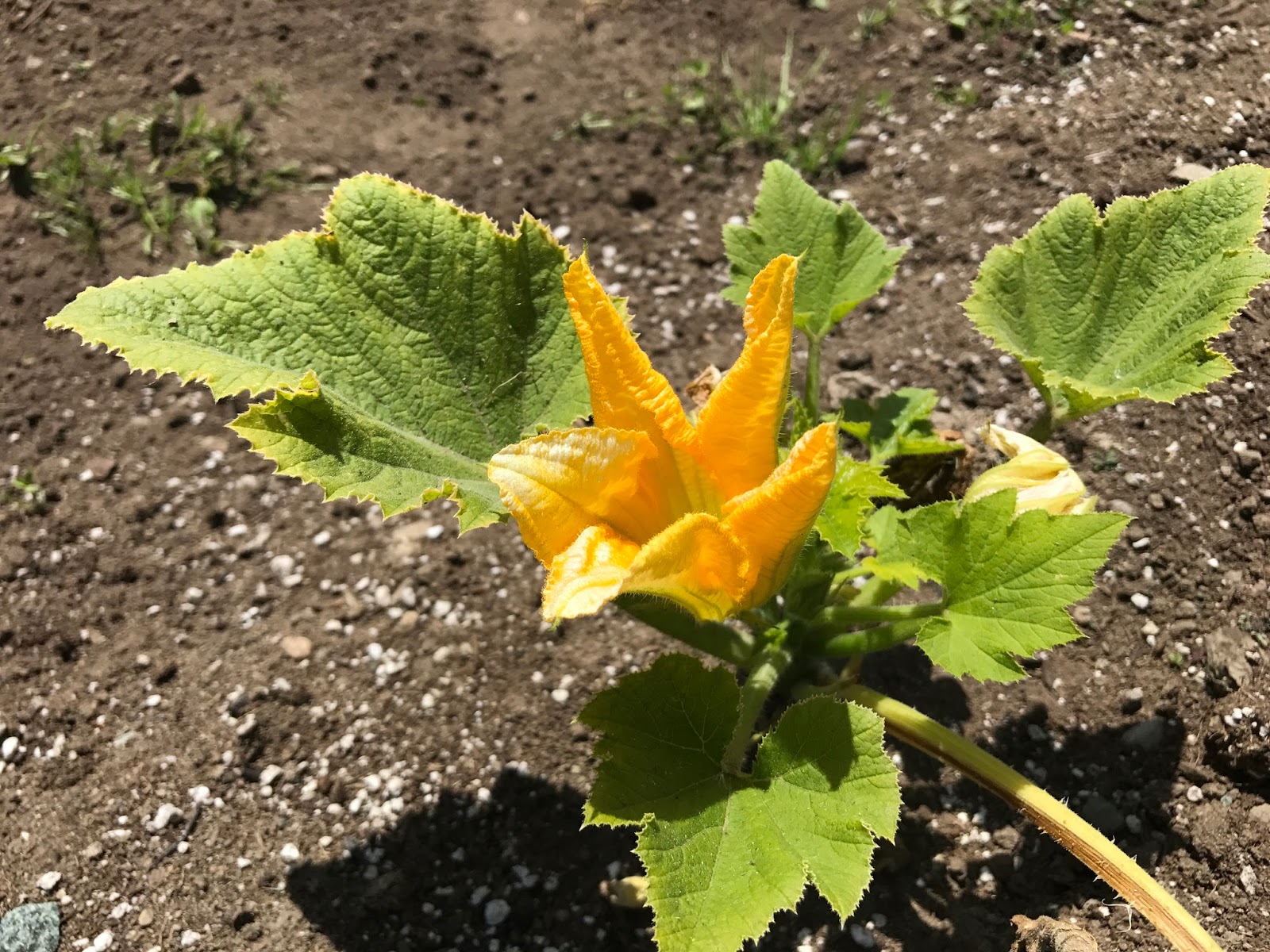
Zucchini is starting to blossom!
Peas are secured for more steady growth.

- Kirstie and Natalie